|
April 1, 2002
The Honorable Thomas Vilsack
Governor of Iowa
State Capitol
Des Moines, Iowa 50319
Dear Governor Vilsack:
On behalf of the members and staff of the Iowa Board of
Parole, I am pleased to submit our Annual Report for State Fiscal Year 2001
(July 1, 2000 – June 30, 2001)..
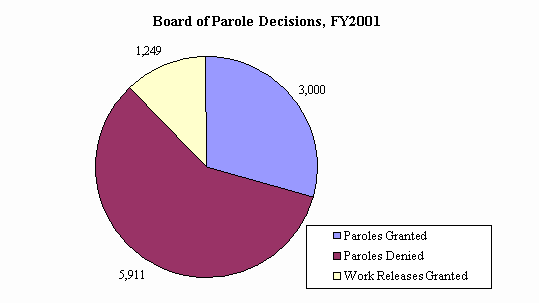
During FY 2001 the Board approved 1,249 work release
applications and 3,000 paroles. These figures represent a 12.8 percent increase
in work releases and a 6.2 percent increase in paroles. FY2001 data show that
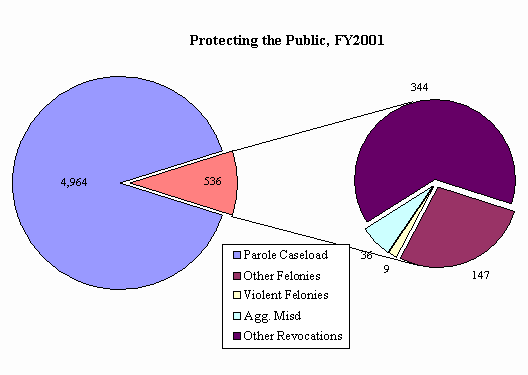
the Board has continued to work diligently to protect the public: while there
were approximately 5,500 individuals on parole at the end of FY2001, there were
only 548 (10.0 percent) revocations during the year, of which seven (1.3
percent) were for new forcible felonies. While
29,555 paroles have been granted since July of 1989, only 116 (0.4 percent) have
resulted in revocation for new forcible felonies.
This year’s report builds on the reports prepared since FY98,
as the Board is attempting to provide a more complete understanding of its
workload and the environment in which it functions. We continue to include
historical data to permit an understanding of parole trends.
During the past year the Board of Parole continued using
technology to assist in protecting the public and responding to the needs of
victims. With its innovative use of the Iowa Communications Network (ICN), in
recent years the Board has dramatically increased efficiency while reducing
travel in considering parole. The ICN has also been of great assistance in
safely controlling the size of the prison population. It also allows us to
conduct revocation hearings and offer statewide public education from our own
conference room.
During FY2001 the Board also continued supervision of the
Sixth Judicial District Pilot Project, which has sadly been terminated by the
Supreme Court as a violation of the separation-of-powers doctrine in the Iowa
Constitution. The project used administrative parole judges to conduct probation
revocation hearings, thus reducing the workload of criminal court judges and
increasing consistency in revocation proceedings. A second administrative judge
was added to the project in FY01, increasing the its capacity to deal with
probation revocation hearings. While the project had been met with approval from
many of those touched by its operation, it ceased functioning on February 27,
2002. Despite this setback, the Board will continue to search for innovative
solutions to deal with issues involving probation and parole.
Respectfully submitted,
Elizabeth Ford,
Chairwoman
TABLE OF CONTENTS
I. HIGHLIGHTS
*
II. MISSION STATEMENT
*
III. AGENCY OVERVIEW
*
IV. BOARD RESPONSIBILITIES
*
Table 1. Performance Summary FY2000 and FY2001
*
Table 2. Parole and Work Release Grants, FY1992-FY2001
*
Table 3. Decisions by Offense Class, FY2001
*
Table 4. Paroles and Expirations, by Offense Class and type, FY2001
*
Table 5. Executive Clemency, FY2001
*
V. IOWA COMMUNICATIONS NETWORK
*
Table 6. Mileage Saved by ICN
*
Table 7. ICN Hearings, Interviews, and Costs, by Fiscal Year
*
VI. PRISON POPULATION
*
Table 8. Prison Population by Offense Type
*
Table 9. Sentence Length of Prison Population
*
Table 10. New Prison Admissions by Offense Type, Most Common Offense,
FY1991-2001 *
Table 11. Race of Prison Population at End of Fiscal Year, 1991-2001
*
Table 12. Age of Prison Population at end of Fiscal Year, 1991-2001
*
Table 13. Number of Prison Commitments of Prison Population on June 30
*
Table 14. June 30 Population, Lifers, Mandatory Minimums
*
Table 15 Prison Population Offense Types
*
Table 16. Risk Levels of Prison Population 6/30/2001, by Offense Class
*
VII. SIXTH JUDICIAL DISTRICT PROBATION PROJECT
*
Table 17. Sixth District Probation Revocation Project
*
Table 18. Comparison: Pilot Project Dispositions FY2001 vs. FY2000
*
Table 19. ALJ #2 Agreement with Recommendations
*
VIII. TIME SERVED PRIOR TO PAROLE
*
Table 20. Time Served Prior to Parole Approval
*
Table 21. FY 2001 Months Served Prior to Parole Approval
*
IX. PAROLE REVOCATION
*
Table 22. Type and Class of Convictions Leading to Automatic Revocations,
FY2001 *
Table 23. Parole Revocations, FY85-FY2001
*
Table 24. Dispositions of Parole Revocation Hearings, FY2000-2001
*
Table 25. Paroles Granted and Revoked, FY2001
*
Table 26. Paroles Granted and Revoked, FY89-FY2001
*
Table 27. Revocation Jail Data, FY2001
*
X. VICTIM SERVICES *
Table 28. Financial Status Report FY2001
*
APPENDICES *
I. HIGHLIGHTS
With the departure of Charles W. Larson, Sr., Elizabeth
Ford was appointed as the Board’s new Chairwoman in September, 2001. The
vacancy created by Mr. Larson’s resignation was filled in the fall of 2001
with the appointment of Richard Bordwell as its new Vice-Chairman.
The Board in FY2001 approved 1,249 work release
applications and 3,000 paroles. With approximately 5,500 individuals on parole
caseloads at the end of the year, only 548 paroles were revoked during FY2001,
with seven of these revocations due to new forcible felonies.
Of all those paroled since July 1, 1989, only 17.3 percent
have been revoked from parole. Less than half of one percent have been revoked
for committing new forcible felonies.
In FY2001 the Board continued its innovative use of the
Iowa Communications Network, which enables the board to maximize productive
use of its time and permit interested parties the opportunity to view parole
hearings without extensive travel. The Board continued extensive use of the
ICN in conducting hearings in FY2001, and the families of victims and inmates
also attended hearings via the ICN. The ICN was also used as an educational
tool for high school students, permitting them to view Board hearings and
question members and staff about their activities.
The Board continued to expand its list of registered
victims, ensuring that victims are notified of parole, work release, and
revocation hearings, and providing them the opportunity for input in the
deliberative process. The number of victim requests processed by the Board has
more than doubled since FY1996. The Board has also established a toll-free
victim number to facilitate communications: 866-448-4611.
The Board continued an experiment in the Sixth Judicial
District, using the Senior Administrative Parole Judge for probation
revocation hearings in which the original sentence was a suspended prison
sentence, thereby providing additional consistency in these proceedings. A
second administrative law judge was added to the project in FY01, increasing
its capability to deal with revocation hearings. There is some evidence that
this project has contributed to a low rate of parole revocation in the Sixth
District.
The Board continued its use of risk assessment in granting
or denying work release or parole. This tool has enabled the Board to better
protect the public while not delaying release for inmates who are good risks.
During FY2001 the Board began a re-validation of its risk assessment to assess
its accuracy in identifying the most dangerous offenders.
II. MISSION STATEMENT
Objectives:
Comprehensive and efficient consideration for parole and work release of
offenders committed to the Department of Corrections.
Expeditious revocation of paroles of persons who violate release
conditions.
Careful consideration of victim opinions concerning the release of
offenders and prompt notification to victims of Board of Parole release
decisions.
Quality advice to the Governor in matters relating to executive clemency.
Timely research and analysis of issues critical to the performance of the
Board of Parole.
III.
AGENCY OVERVIEW
The Iowa Board of Parole consists of five members appointed
by the Governor. The chairperson and vice-chair are full-time salaried members
of the Board. Three members are on a per diem basis and all five members serve
staggered, four-year terms.
Iowa law states that the membership of the Board must be of
good character and judicious background, must include a member of a minority
group, may include a person ordained or designated a regular leader of a
religious community and who is knowledgeable in correctional procedures and
issues, and must meet at least two of the following three requirements:
1) contain one member who is a disinterested layperson;
2) contain one member who is an attorney licensed to
practice law in this state and who is knowledgeable in correctional
procedures and issues;
3) contain one member who is a person holding at least
a master’s degree in social work or counseling and guidance and who is
knowledgeable in correctional procedures and issues.
BOARD OF PAROLE MEMBERSHIP
ELIZABETH ROBINSON-FORD, Chairwoman, Davenport.
Robinson-Ford was appointed to the Board in November, 1994, and appointed
Chairperson in October, 2001 after having previously served as Vice-Chairperson.
She also serves on the Iowa Prisoner Minority Over-Representation Task Force.
Robinson-Ford has worked for the City of Shreveport, Louisiana, as an
Administrative Assistant and Records Specialist for the Police Department. She
is a member of the Minority Chamber of Commerce, the Iowa Invests Mentor
Program, the Juvenile Justice Committee, Big Sisters, and United Way. She has
also been selected to serve on the Iowa Board for the Treatment of Sexual
Abusers, the Criminal and Juvenile Justice Planning Council, and the Iowa
Organization for Victim Assistance. She has a degree in Applied Sciences from
Southern University at Shreveport and a degree in Business
Administration/Accounting from Commercial Business College in Alexandria,
Louisiana. She has continued her education in the criminal justice field.
Chairperson Robinson-Ford retired as Administrative Assistant with the Scott
County Decategorization Program in 1999.
CHARLES W. LARSON, Chairperson, Cedar Rapids. Larson
retired from his position as Board Chairperson in September, 2001 to become U.S.
District Attorney for the Northern District of Iowa. Larson was appointed to the
Board of Parole in May, 1998, after serving as Iowa’s Drug Policy Coordinator
since 1993. This was his second term with the Board of Parole. Larson also
served for seven years as United States Attorney for the Northern District of
Iowa. From 1979 to 1982 he served in Saudi Arabia as a consultant to the
Kingdom’s Highway Patrol Project. From 1973 to 1979 he served as Iowa’s
Commissioner of Public Safety. Larson retired as a colonel from the Active Army
Reserves.
RICHARD S. BORDWELL, Vice Chairperson, Washington, Iowa.
Bordwell was appointed to the Board of Parole in October, 2001. He has been in
the private practice of law since 1972. He also served as a county attorney for
6 ½ years and as a judicial magistrate for five years. In 1969 he received a
B.S. degree form Iowa State University and, three years later, a J.D. degree
from the University of Iowa. Bordwell retired as a Major from the U.S. Army
Reserve.
CURTIS S. JENKINS, West Des Moines. Jenkins was appointed
to the Board of Parole by Governor Terry Branstad in 1997. He was reappointed by
Governor Thomas J. Vilsack in 2001. Jenkins has BS from Southern Illinois
University. He is the is a member of the Corinthian Baptist Church, Kappa Alpha
Psi Fraternity, Des Moines Alumni, and the KAPSI Foundation. Jenkins served in
the United States Air Force. His volunteer work includes Internal Audit
Committee and Tax Return Preparation for the Corinthian Baptist Church. He
serves on the Board of Directors of OSACS Women Center and the Corinthian
Gardens Apartments.
KAREN KAPLAN MUELHAUPT, Des Moines. Governor Thomas
Vilsack appointed Muelhaupt to the Board of Parole in 1999. She received her BA
degree from Drake University in 1988. She worked for the Department of
Corrections as a Pre-sentence investigator from 1975-1985. In 1985, she was
hired as a rape counselor with Polk County Victim Services. She co-created one
of the Nation’s first Homicide Crisis Response teams, and in 1997 was the
recipient of the Presidential Crime Victims award. She retired in 1998.
Muelhaupt is a licensed Social Worker.
ROGERS KIRK, JR.,
Davenport. Kirk was appointed to the Board in November, 1999. For the past four
years he has been the Pastor of the Third Missionary Baptist Church of
Davenport. Pastor Kirk is President of the Iowa Congress of Christian Education,
Dean of the Eastern District Association, Instructor in the National Congress of
Christian Education, and Instructor at the American Baptist Theological
Seminary. He is also past-president of the NAACP Metro-Com Branch, Quad City
Interfaith and serves on many state and local boards. Pastor Kirk attended
Northeast Louisiana University and has served parishes in Monroe and Ruston,
Louisiana.
BOARD STAFF
Clarence Key, Jr., Executive Director. Key has served the
Board since November of 1999. Key has a BA degree in Criminal Justice from
Simpson College and has worked in state government for over twenty years. Mr.
Key has served as a probation officer for the 5th Judicial District Department
of Correctional Services, as an Assistant for Corrections (Prison Ombudsman) for
the Citizen's Aide Ombudsman, and as a Justice Systems Analyst for the Division
of Criminal and Juvenile Justice Planning. Key also currently serves as an
executive board member of the Des Moines Branch of the NAACP and has been
president of the Iowa Corrections Association (1993-1994).
James C. Twedt, Senior Administrative Parole/Probation Judge
Jerry Menadue, Liaison Officer
Heather Hackbarth, Statistical Research Analyst
Karen Myers, Executive Officer
Lori Myers, Case Coordinator and Liaison Officer
Diane Jay, Victim Coordinator
Jo McGrane, Administrative Secretary
Carol Edmonston, Clerk
Michelle Carlson, Clerk Specialist
Paul Stageberg, Ph.D., Report Consultant
This project was supported by grant number 01C-1956, awarded
by the Governor’s Office of Drug Control Policy (ODCP). Points of view in this
document do not necessarily represent the official position or policies of
either ODCP or the U.S. Department of Justice.
IV. BOARD RESPONSIBILITIES
Inmate Reviews and Interviews. By law, the Board
systematically reviews the status of each person committed to the custody of the
Director of the Iowa Department of Corrections and considers the person’s
prospects for parole or work release. The Board reviews at least annually the
status of persons other than Class A felons, Class B felons serving time under
the 85% law or felons serving mandatory minimum sentences. The Board also
provides the person written notice of its parole or work release decision.
Not less than twenty days prior to conducting a hearing at
which the Board interviews the person, the Board notifies the Department of
Corrections regarding the interview schedule. The Department then makes the
person available to the Board at the person’s institutional residence.
Risk Assessment. The Board has used offender risk
assessment since March, 1981. Its use has enabled the Board to increase paroles
while maintaining a high degree of public safety. An offender is rated on a
scale from one to nine. In order to be granted parole, those receiving a parole
risk score of one through six require three affirmative votes from the Board; a
risk score of seven or eight requires four votes; and a risk score of nine
requires all five votes.
Victim Notification. The Board notifies registered
victims of violent crimes of upcoming interviews with identified offenders and
of decisions made at those interviews. The victim or appointed counsel has the
right to attend the interviews and testify. In addition, all written
communications from victims become a permanent part of offenders’ files.
Parole. The Board is empowered to grant, rescind, and
revoke parole, as well as discharge offenders from parole. The Board decides the
conditions of parole, which may be added to by the supervising Judicial District
Work Release. The Board is empowered to grant or
rescind work release. Work release periods are approximately six months, but may
be adjusted through Board action.
Review of Parole and Work Release Programs. The Board
is required to review parole and work release programs being instituted or
considered nationwide and determine which programs may be useful for Iowa. Each
year the Board also reviews current parole and work release programs and
procedures used in the State of Iowa.
Release Studies. The Board is required to conduct
studies of the parole and work release system as requested by the Governor and
the General Assembly. The Board has fulfilled this responsibility in recent
years by conducting recidivism studies of inmates released in FY1990, FY1996,
and FY1998.
Review of Computer System. The Board is required to
increase utilization of data processing and computerization to assist in the
orderly operation of the parole and work release system.
BOARD WORKLOAD
The information contained in this section provides a
statistical summary of the Board’s workload for FY2001. As the tables and charts
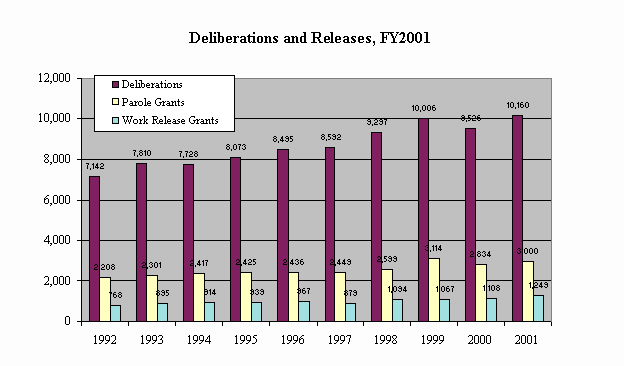
on the following pages indicate, the Board conducted a total of 10,160 release
deliberations. These deliberations resulted in the Board’s granting 3,000
paroles and 1,249 work releases. The majority of parole and work release grants
were derived from case reviews rather than inmate interviews.
In FY2001 the Board continued taking particular care in
paroling inmates convicted of crimes against persons. While 29.3 percent of the
9,076 deliberations involving felons resulted in paroles, only 10.3 percent of
those involving felonies against persons resulted in paroles. Those convicted of
crimes against persons were also less likely to be granted work release.
The Board attempted to respond to increasing pressure on the
prison population in FY2001 by reducing average length of stay prior to a
release decision. Because of its focus on preventing new violent crime, most of
the reduction was seen among non-violent offenders.
Parole revocation hearings totaled 610 in FY2001, compared to
618 in FY2000. Of the total hearings, 536 resulted in revocation of parole. One
hundred ninety-two of these (or 35.8 percent) were
automatic revocations due to new convictions for felonies or aggravated
misdemeanors. In addition, the Board conducted 363 work release revocation
hearings, with 335 of these resulting in revocation.
On occasion the Board may rescind a grant of parole or work
release due to inmate misbehavior, failure to follow through in development of a
parole or work release plan, or at an inmate’s request. In FY2001 there were 233
parole rescissions, with 40 of these resulting from inmate refusal of parole.
There were also 92 work release rescissions, with 43 of these due to inmate
refusal.
Reviews of applications for restoration of citizenship
totaled 487, with 320 (65.7 percent) recommended to the Governor. Both these
figures were down from FY2000, although the change may be artificial due to a
change in record keeping.
The Board reviewed 29 appeals from inmates requesting
reconsideration of prior decisions resulting from revocation hearings.
Also, the number of offenders receiving simultaneous parole and discharge
totaled 236. These offenders are typically within 30 days of the end of their
sentences, have had no recent disciplinary reports, are usually misdemeanants
with low risk assessment scores, and are not serving sentences for felony sex
offenses. The Board has concluded that the short period remaining until
expiration of sentence is insufficient for parole officers to verify parole
plans or commence supervision.
While figures suggest a decrease in executive clemency
applications in FY2001, a change in record keeping may have resulted in some of
the drop.
The research division completed 2,940 offender risk
assessments in FY2001, a 21 percent increase from FY2000. As shown in the
appendix, the Board makes consistent use of these assessments in determining
whether to approve or deny parole or place inmates on work release.
Also, the victim coordinator reviewed 702 victim requests and
mailed 2,330 notices to registered victims. Both these figures were up from
FY2000 (564 requests and 2,102 notices). Registration requests have more than
doubled since FY96. The total number of registered victims at the end of FY2001
was 2,300, compared to 1,988 in FY2000.
The table and graphs on the following pages show the workload
of the Board and staff members for FY 2001
|
Table 1.
Performance Summary FY2000 and FY2001 |
|
|
FY2000 |
FY2001 |
% change |
| RELEASE
DELIBERATIONS: |
9,508 |
10,160 |
6.9% |
| INMATE INTERVIEWS |
1,450 |
1,832 |
26.3% |
|
Paroles Granted |
535 |
614 |
14.8% |
|
Work Release Granted |
359 |
420 |
17.0% |
| CASE REVIEWS |
8,058 |
8,328 |
3.4% |
|
Paroles Granted |
2,290 |
2,386 |
4.2% |
|
Work Release Granted |
748 |
829 |
10.8% |
|
REVOCATIONS/RESCISSIONS: |
|
|
|
| PAROLE REVOCATION
HEARINGS |
618 |
610 |
-1.3% |
|
Parole Revocations |
484 |
548 |
13.2% |
|
Automatic Revocations |
135 |
192 |
42.2% |
| WORK RELEASE
REVOCATION HEARINGS |
342 |
363 |
6.1% |
| Work Releases Revoked |
289 |
335 |
15.9% |
| PAROLES RESCINDED |
161 |
233 |
44.7% |
| WORK RELEASES
RESCINDED |
|
|
|
|
Work Releases Rescinded |
90 |
92 |
2.2% |
| REVOCATION APPEALS |
29 |
23 |
-20.7% |
|
Affirmed |
20 |
16 |
-20.0% |
|
Amended |
9 |
7 |
-22.2% |
| EXECUTIVE CLEMENCY
APPLICATIONS: |
164 |
119 |
-27.4% |
|
Granted |
47 |
40 |
-14.9% |
|
Denied |
36 |
77 |
113.9% |
| LIFER REVIEWS |
1 |
2 |
100.0% |
|
Commutations Recommended |
0 |
1 |
-- |
| PARDON REVIEWS |
32 |
88 |
175.0% |
|
Pardons Recommended |
8 |
37 |
362.5% |
| RESTORATION OF
CITIZENSHIP REVIEWS |
465 |
487 |
4.7% |
|
Restorations Recommended |
397 |
320 |
-19.4% |
| OTHER REVIEWS: |
|
|
|
| Inmate Board Decision
Appeals |
29 |
102 |
251.7% |
| Parole to Discharge** |
115 |
236 |
105.2% |
| OTHER BOARD WORK: |
|
|
|
| Risk Assessments
Completed |
2,430 |
2,940 |
21.0% |
| Registered Victims,
Yearend* |
1,988 |
2,300 |
15.7% |
| Victim Registration
Requests |
564 |
702 |
24.5% |
| Victim Registrations
Approved |
475 |
567 |
19.4% |
| Victim Notices Mailed |
2,102 |
2,330 |
10.8% |
| *
FY2000 figure differs from that in FY00 report. |
|
|
|
| **
Actual releases. FY2000 figure differs from FY2000 report |
|
|
|
Table 2.
Parole and Work Release Grants, FY1992-FY2001 |
|
Year |
1992 |
1993 |
1994 |
1995 |
1996 |
1997 |
1998 |
1999 |
2000 |
2001 |
% Change |
| Parole Grants |
2,208 |
2,301 |
2,417 |
2,425 |
2,436 |
2,449 |
2,599 |
3,114 |
2,834 |
3,000 |
35.9% |
| Work Release Grants |
768 |
895 |
914 |
939 |
967 |
879 |
1,094 |
1,067 |
1,108 |
1,249 |
62.6% |
|
Table 3.
Decisions by Offense Class, FY2001 |
|
Decision |
|
|
|
Parole Release |
Work Release |
Release Denied |
Total |
|
Offense Class |
N |
% |
N |
% |
N |
% |
N |
% |
|
Compact Felony not person |
|
0.0% |
|
0.0% |
7 |
100.0% |
7 |
0.1% |
|
Compact Felony Total |
0 |
0.0% |
0 |
0.0% |
7 |
100.0% |
7 |
0.1% |
|
Other Felony not person |
27 |
31.0% |
12 |
13.8% |
48 |
55.2% |
87 |
0.9% |
|
Other Felony Total |
27 |
31.0% |
12 |
13.8% |
48 |
55.2% |
87 |
0.9% |
|
Habitual not person |
47 |
19.3% |
38 |
15.6% |
159 |
65.2% |
244 |
2.4% |
|
Habitual vs. person |
8 |
19.5% |
2 |
4.9% |
31 |
75.6% |
41 |
0.4% |
|
Habitual Total |
55 |
19.3% |
40 |
14.0% |
190 |
66.7% |
285 |
2.8% |
|
B Felony not person |
30 |
19.7% |
24 |
15.8% |
98 |
64.5% |
152 |
1.5% |
|
B Felony vs. person |
71 |
7.3% |
78 |
8.1% |
817 |
84.6% |
966 |
9.5% |
|
B Felony Total |
101 |
9.0% |
102 |
9.1% |
915 |
81.8% |
1,118 |
11.0% |
|
C Felony not person |
669 |
31.5% |
360 |
17.0% |
1,092 |
51.5% |
2,121 |
20.9% |
|
C Felony vs. person |
113 |
10.4% |
104 |
9.6% |
865 |
79.9% |
1,082 |
10.6% |
|
C Felony Total |
782 |
24.4% |
464 |
14.5% |
1,957 |
61.1% |
3,203 |
31.5% |
|
D Felony not person |
1,608 |
42.7% |
490 |
13.0% |
1,668 |
44.3% |
3,766 |
37.1% |
|
D Felony vs. person |
86 |
14.3% |
51 |
8.5% |
463 |
77.2% |
600 |
5.9% |
|
D Felony Total |
1,694 |
38.8% |
541 |
12.4% |
2,131 |
48.8% |
4,366 |
43.0% |
|
Old Code vs. person |
1 |
10.0% |
1 |
10.0% |
8 |
80.0% |
10 |
0.1% |
|
Old Code Total |
1 |
10.0% |
1 |
10.0% |
8 |
80.0% |
10 |
0.1% |
|
Total Felonies not person |
2,381 |
37.3% |
924 |
14.5% |
3,072 |
48.2% |
6,377 |
62.8% |
|
Total Felonies vs. person |
279 |
10.3% |
236 |
8.7% |
2,184 |
80.9% |
2,699 |
26.6% |
|
Total Felonies |
2,660 |
29.3% |
1,160 |
12.8% |
5,256 |
57.9% |
9,076 |
89.3% |
|
Agg. Misd. not person |
289 |
42.1% |
61 |
8.9% |
337 |
49.1% |
687 |
6.8% |
|
Agg. Misd. vs. person |
42 |
12.4% |
22 |
6.5% |
276 |
81.2% |
340 |
3.3% |
|
Agg. Misdemeanor Total |
331 |
32.2% |
83 |
8.1% |
613 |
59.7% |
1,027 |
10.1% |
|
Ser. Misd. not person |
8 |
23.5% |
5 |
14.7% |
21 |
61.8% |
34 |
0.3% |
|
Serious Misd. vs. person |
1 |
4.3% |
1 |
4.3% |
21 |
91.3% |
23 |
0.2% |
|
Serious Misdemeanor Total |
9 |
15.8% |
6 |
10.5% |
42 |
73.7% |
57 |
0.6% |
|
Total Misd. not person |
297 |
41.2% |
66 |
9.2% |
358 |
49.7% |
721 |
7.1% |
|
Total Misd. vs. person |
43 |
11.8% |
23 |
6.3% |
297 |
81.8% |
363 |
3.6% |
|
Total Misdemeanors |
340 |
31.4% |
89 |
8.2% |
655 |
60.4% |
1,084 |
10.7% |
|
All Crimes not person |
2,678 |
37.7% |
990 |
13.9% |
3,430 |
48.3% |
7,098 |
69.9% |
|
All Crimes vs. person |
322 |
10.5% |
259 |
8.5% |
2,481 |
81.0% |
3,062 |
30.1% |
|
Total All Crimes |
3,000 |
29.5% |
1,249 |
12.3% |
5,911 |
58.2% |
10,160 |
100.0% |
Note: Parole release, work release, and denied column percentages add up
horizontally. Total
column percentages add up vertically.
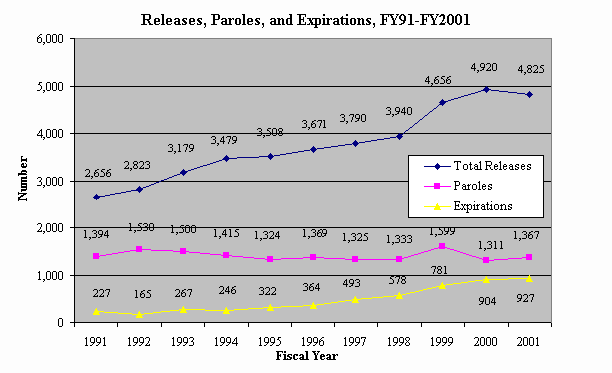
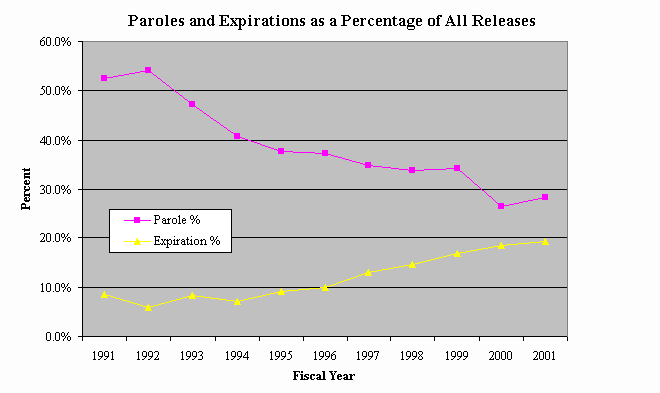
As is suggested
in the chart above, expiration of sentence has played an increasing role as a
means of exit from Iowa’s prison population. This is due primarily to the
Board’s belief that there are certain types of offenders from whom the public
must be protected as long as possible. While the Board supports the concept of
supervision after release from prison, it is thought that maintaining some
offenders as long as possible in a secure environment will contribute to public
safety. To illustrate the variation among offender types in release practices,
Table 4 is presented below:
Table 4.
Paroles and Expirations, by Offense Class and type, FY2001
|
|
Expiration |
Parole |
Par-Work Rel. |
|
Offense Class and Type |
Total N |
N |
% |
N |
% |
N |
% |
|
B Felony 50 year term |
4 |
|
0.0% |
2 |
50.0% |
2 |
50.0% |
|
B Felony 85% law |
1 |
1 |
100.0% |
|
0.0% |
|
0.0% |
|
B Felony drug |
26 |
|
0.0% |
14 |
53.8% |
12 |
46.2% |
|
B Felony vs. persons |
79 |
25 |
31.6% |
18 |
22.8% |
36 |
45.6% |
|
Habitual-property |
51 |
5 |
9.8% |
20 |
39.2% |
26 |
51.0% |
|
Habitual-persons |
8 |
1 |
12.5% |
2 |
25.0% |
5 |
62.5% |
|
Other Felony-Drug |
29 |
3 |
10.3% |
15 |
51.7% |
11 |
37.9% |
|
C Felony not persons |
672 |
81 |
12.1% |
354 |
52.7% |
237 |
35.3% |
|
C Felony vs. persons |
195 |
103 |
52.8% |
42 |
21.5% |
50 |
25.6% |
|
D Felony OWI |
816 |
77 |
9.4% |
684 |
83.8% |
55 |
6.7% |
|
D Felony not persons |
991 |
271 |
27.3% |
519 |
52.4% |
201 |
20.3% |
|
D Felony vs. persons |
179 |
106 |
59.2% |
51 |
28.5% |
22 |
12.3% |
|
Compact |
3 |
2 |
66.7% |
1 |
33.3% |
|
0.0% |
|
Old Code |
2 |
|
0.0% |
1 |
50.0% |
1 |
50.0% |
|
Felonies vs. persons |
468 |
236 |
50.4% |
116 |
24.8% |
116 |
24.8% |
|
Felonies not persons |
2,585 |
437 |
16.9% |
1,606 |
62.1% |
542 |
21.0% |
|
Total Felonies |
3,056 |
675 |
22.1% |
1,723 |
56.4% |
658 |
21.5% |
|
Aggravated Misd. OWI |
119 |
27 |
22.7% |
91 |
76.5% |
1 |
0.8% |
|
Agg. Misd. not persons |
321 |
141 |
43.9% |
161 |
50.2% |
19 |
5.9% |
|
Agg. Misd. vs. persons |
188 |
147 |
78.2% |
34 |
18.1% |
7 |
3.7% |
|
Serious Misd. OWI |
2 |
1 |
50.0% |
1 |
50.0% |
|
0.0% |
|
Serious Misd. not persons |
17 |
14 |
82.4% |
3 |
17.6% |
|
0.0% |
|
Serious Misd. vs. persons |
16 |
16 |
100.0% |
|
0.0% |
|
0.0% |
|
Misd. vs. persons |
204 |
163 |
79.9% |
34 |
16.7% |
7 |
3.4% |
|
Misd. not persons |
459 |
183 |
39.9% |
256 |
55.8% |
20 |
4.4% |
|
Total Misdemeanors |
663 |
346 |
52.2% |
290 |
43.7% |
27 |
4.1% |
|
Total |
3,719 |
1,021 |
27.5% |
2,013 |
54.1% |
685 |
18.4% |
|
Note: Compact felonies could not be identified as against
or not against persons. |
Source: ACIS
Readers interested in an expanded version of this table are urged to consult
Appendix 6, which lists paroles,
expirations, and expiration percentages, by offense.
Due to the provisions of Iowa Code chapter 914, a person
convicted of a criminal offense has the right to make application for executive
clemency to the Governor of Iowa. The Governor requests that the Board of Parole
make a recommendation regarding these applications. Requests for restoration of
citizenship may also be submitted directly to the Iowa Board of Parole within
sixty days of discharge from supervision. All applications for commutation,
pardons, special restoration of citizenship (firearms), restoration of
citizenship (after Board's sixty day time frame) must be submitted to the
Governor’s office, which then forwards the applications on to the Board for
review. Table 5 shows
activity in this area for FY2001. Note that a number of applications may be
pending at any given time, so the total number of applications shown in the
table may not equal the number of approvals plus denials.
|
Table 5.
Executive Clemency, FY2001 |
|
Board Rec. |
|
Application Type |
Received |
Grant |
Deny |
|
Commutation |
2 |
1 |
1 |
|
Pardon |
16 |
17 |
21 |
|
Special Citizenship (firearms) |
21 |
19 |
33 |
|
Restoration of Citizenship |
487 |
320 |
96 |
|
Federal Restoration of Citizenship |
0 |
|
|
|
Total |
526 |
357 |
151 |
| Note: Grants and
denials may exceed number received due to carryover from previous year. |
V. IOWA COMMUNICATIONS
NETWORK
On July 14, 1994, the Board began to make use of the new Iowa
Communications Network (ICN) to manage the State’s prison population more
effectively and efficiently.
The ICN is a statewide two-way full motion fiber optic
communication network that uses modern technology to connect points throughout
all of Iowa’s ninety-nine counties. This network facilitates a variety of Board
functions including parole interviews, registered victim input, and parole
revocation hearings. Further, the ICN has allowed criminal justice students and
the public to observe actual interviews of inmates being considered for parole
or work release.
Iowa is the first state in the Nation to use its fiber optics
system for monthly parole interviews. Since its initial use of the system in
July of 1994, the Board experienced few difficulties with the ICN; the benefits
(i.e., cost effectiveness, reduced travel time, and ease of use) have generated
positive reactions from the Board, the media, the public, and other states.
Inmates and family members have also expressed support for participation in the
interview process via the ICN.
With the completion of its own classroom in October, 1995,
the Board greatly increased its use of the ICN in the parole process. The Board
no longer needs to prepare volumes of inmate files for transport to an ICN
classroom; files are reviewed from the Board’s conference room. Thus,
transportation and security concerns regarding inmate files have been greatly
reduced.
Prior to ICN, victims desiring input were required to travel
to a distant institution, were subjected to a rigorous security check, and were
possibly seated in the same room as the inmate’s family and friends. With the
creation of the Board’s TeleVictim Program, a registered victim is notified of
the intended release hearing and is directed to an ICN site near the victim’s
home. The victim travels to the local site, provides input, and returns home.
The process often requires a few minutes instead of many hours under the old
process. Further, the ICN separates victims from inmates, families, and friends
and helps defuse potentially tense situations. The incorporation of the
registered victim input process via the ICN continues to be a model for parole
board interaction with registered victims.
One thousand, four hundred thirty-three parole and probation
revocation hearings have been conducted via the ICN since July of 1994. Prior to
the creation of the ICN, parole revocation hearings required travel to counties
where the alleged parole violation occurred, which could involve as many as four
hours of travel one-way. With the advent of ICN, the parole judge travels to a
nearby ICN classroom, conducts the hearings, determines violations and
appropriate sanctions, and proceeds to the next case. Probation revocation cases
are handled as part of the pilot project in the Sixth Judicial District. Of the
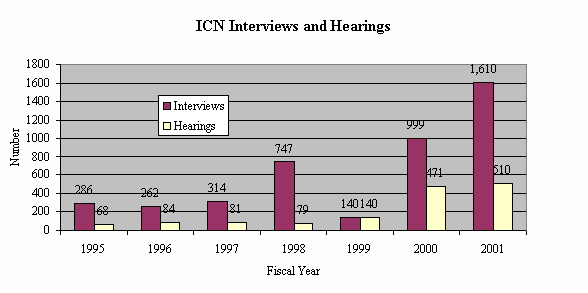
510 ICN hearings conducted in FY2001, 235 were probation revocation hearings.
Further information on these will be found in the chapter on the Sixth
Judicial District pilot program.
The existence of the ICN permitted the Board of Parole to
establish its TeleJustice 2000 Education Project in May of 1998 in cooperation
with the Heartland Area Education Association. The three main objectives of this
project are the following:
To provide students with information about ICN Technology
To provide students with information about the criminal justice system
To provide students with information about actual real life substance
abuse problems.
This project places high school students in the live parole interview
sessions of the Parole Board via the ICN. Students view inmates making pleas for
freedom and the Board’s reactions as they occur. At the conclusion of sessions
the students can question the Board or the students’ in-class attorney
volunteers. This process enables the students also learn about the
characteristics of incarcerated offenders in Iowa and the behaviors that
resulted in their imprisonment. Since May of 1998
the Board has hosted over 85 high school classes in this project. Use of the ICN
for this purpose has been met with enthusiasm among students, teachers, and
local media.
The Board has also utilized the ICN for a number of special
projects, including statewide meetings of registered victims and training of
parole and probation officers and local public defenders.
The Board’s TeleJustice 2000 Video Project is a program that
has resulted in the installation of current video technology in selected Iowa
courthouses (Linn County, Polk County, Scott County and Sioux County) along with
the Polk County Jail and Interim Jail.
At the present time, the TeleJustice Courtroom is used
primarily for Parole and Probation Revocation Hearings. During FY2001 Senior
Administrative Parole and Probation Judge James C. Twedt has conducted
approximately 204 hearings from his Boone Field Office to Video Courtroom 1B in
Cedar Rapids. This process allows Judge Twedt to avoid the lengthy round trip to
and from Cedar Rapids.
|
Table 6.
Mileage Saved by ICN |
|
Board Meetings |
Revocations |
Victims |
Families |
|
Fiscal Year |
Mileage |
Hours |
Mileage |
Hours |
Mileage |
Hours |
Mileage |
Hours |
|
1995 |
6,444 |
128.9 |
11,590 |
231.8 |
3,306 |
66.1 |
5,344 |
106.9 |
|
1996 |
6,081 |
121.6 |
22,666 |
453.3 |
1,285 |
25.7 |
5,951 |
119.0 |
|
1997 |
7,416 |
148.3 |
16,726 |
334.5 |
2,480 |
49.6 |
6,016 |
120.3 |
|
1998 |
11,608 |
232.2 |
17,682 |
353.6 |
5,317 |
106.3 |
24,746 |
494.9 |
|
1999 |
10,506 |
210.1 |
17,432 |
348.6 |
3,666 |
73.3 |
15,768 |
315.4 |
|
2000 |
13,976 |
279.5 |
46,086 |
921.7 |
5,094 |
101.9 |
15,333 |
306.7 |
|
2001 |
17,523 |
350.5 |
45,474 |
909.5 |
8,614 |
172.3 |
18,639 |
372.8 |
Note: hours were calculated as
mileage divided by 50. Mileage for Board meetings and revocations were
calculated as the distance between Des Moines and the institution in which
hearings were held. Mileage for victims and families was developed by
identifying victims and families who attended ICN hearings, locating their place
of residence, and calculating the distance between there and the site of the
hearing .
The Board plans continued use of such technological advances
as the ICN as it strives to protect the public from serious crime.
|
Table 7.
ICN Hearings, Interviews, and Costs, by Fiscal Year |
|
Fiscal Year |
Hearings |
Interviews |
Costs |
|
1995 |
68 |
286 |
$3,385.70 |
|
1996 |
84 |
262 |
$7,348.25 |
|
1997 |
81 |
314 |
$8,798.00 |
|
1998 |
79 |
747 |
$7,883.21 |
|
1999 |
140 |
865 |
$10,613.08 |
|
2000 |
471 |
999 |
$28.561.22* |
|
2001 |
510 |
1,610 |
$44,098.61 |
*Cost data for FY2000 are estimated, as figures for
May, 2000 were unavailable. Estimated May figures were developed using
prorated figures from the 11-month totals.
VI. PRISON POPULATION
This section is included because, while boards of parole have
some control over output from prisons, they have little control over
input to prisons. Although boards of parole may have some impact on the
nature of the prison population through paroling activity (e.g., through either
hastening or delaying release of certain types of prisoners), by and large the
prison population is a "given" with which a board must work.
Table 8 shows the make-up of Iowa’s prison population on June
30, 2001, dividing the population into offense classes and persons/non-persons
groups. The largest portion of the population is serving time for Class C and
Class D felonies (ten-year and five-year maximums) that are not against persons.
The only other category of offense accounting for more than ten percent of the
population is Class B felonies against persons (principally robbery in the first
degree).
|
Table 8.
Prison Population by Offense Type |
|
6/30/2001 |
|
Non Persons Offenses |
Persons Offenses |
Total
|
|
Offense Class |
N |
% |
N |
% |
N |
% |
|
Class A Felony |
0 |
0.0% |
515 |
100.0% |
515 |
6.6% |
|
Class B Felony |
457 |
30.8% |
1,025 |
69.2% |
1,482 |
19.0% |
|
Other Felony |
349 |
86.0% |
57 |
14.0% |
406 |
5.2% |
|
Class C Felony |
1,555 |
56.8% |
1,182 |
43.2% |
2,737 |
35.1% |
|
Class D Felony |
1,751 |
78.7% |
474 |
21.3% |
2,225 |
28.5% |
|
Agg. Misdemeanor |
226 |
56.1% |
177 |
43.9% |
403 |
5.2% |
|
Ser. Misdemeanor |
13 |
50.0% |
13 |
50.0% |
26 |
0.3% |
|
All Inmates |
4,351 |
55.8% |
3,443 |
44.2% |
7,794 |
100.0% |
| Source: ACIS.
Excludes compact and federal prisoners, safekeepers, and violators |
Table 9, on page 26, presents data on the length of sentences
of inmates in residence on June 30 going back to 1990. The table shows increases
in each category, but the largest growth among sentences of five years to less
than ten years. This may be due to a combination a factors: a greater likelihood
on the part of judges to incarcerate Class D felons; a higher rate of failure
among Class D felony probationers (these data don’t distinguish between direct
court commitments and probation revocations); or an increasing length-of-stay
for this group.
Table 9 also shows that, since
FY1991, Iowa’s prison population has risen 99.7 percent, or slightly under ten
percent per year. Most recently, Iowa’s prison population grew at 6.0 percent in
FY2001 after a 5.7 percent increase the previous year. Nationally, the Bureau of
Justice Statistics (BJS) reports that, although prison populations increased
only 1.3 percent between 1999 and 2000, the average increase in state prison
populations was 6.0 percent each year from 1990 to 2000 (Beck, 2001). While
prison populations have risen steadily throughout the Nation since 1990, Iowa’s
increase has eclipsed the national average; according to the BJS, Iowa’s
increase from 1990 to 2000 was the Nation’s eleventh highest.
In terms of sentence length, Iowa has seen its largest
increase in those serving sentences for Class D felonies (with maximum
indeterminate terms of up to five years). The largest group of sentences in the
prison population is Class C felonies, with a maximum term of up to ten years,
although this group has seen below-average increases during the past. Many of
these Class C felons have been convicted of controlled substance crimes.
|
Table 9. Sentence Length of Prison Population |
|
Sentence Length |
1991 |
1992 |
1993 |
1994 |
1995 |
1996 |
1997 |
1998 |
1999 |
2000 |
2001 |
% Change |
|
Less than 2 years |
18 |
32 |
20 |
38 |
22 |
24 |
29 |
35 |
29 |
20 |
28 |
55.6% |
|
2 years-less than 5 |
185 |
219 |
252 |
280 |
296 |
334 |
372 |
448 |
411 |
402 |
389 |
110.3% |
|
5 years-less than 10 |
847 |
885 |
1,103 |
1,187 |
1,552 |
1,807 |
1,998 |
2,284 |
2,127 |
2,180 |
2,212 |
161.2% |
|
10 years-less than 15 |
1,776 |
1,898 |
1,967 |
1,937 |
2,178 |
2,237 |
2,342 |
2,615 |
2,574 |
2,591 |
2,741 |
54.3% |
|
15 years-less than 20 |
130 |
148 |
171 |
164 |
194 |
210 |
226 |
244 |
242 |
258 |
274 |
110.8% |
|
20 years-less than 50 |
550 |
592 |
647 |
708 |
809 |
870 |
944 |
1,020 |
1,061 |
1,220 |
1,389 |
152.5% |
|
50 years or more |
417 |
455 |
477 |
499 |
538 |
575 |
623 |
651 |
655 |
717 |
749 |
79.6% |
|
Unknown |
154 |
256 |
58 |
277 |
103 |
119 |
192 |
134 |
132 |
258 |
319 |
107.1% |
|
Total Population |
4,077 |
4,485 |
4,695 |
5,090 |
5,692 |
6,176 |
6,726 |
7,431 |
7,231 |
7,646 |
8,101 |
98.7% |
Source: Department of Corrections E-1 Reports
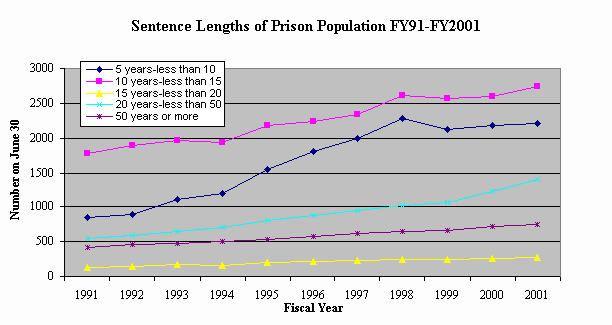
The chart on the following page also presents this
information, but eliminates sentences of less than two years and the unknown
category to make interpretation easier. This shows even more clearly the
dramatic rise in those serving sentences of five years to less than ten years
(principally Class D felons). At least a portion of this rise has been due to
the creation of a new offense, Burglary-3rd degree (a Class D
felony), in 1992. With the creation of this offense there has been a large
decrease in the number of Burglary-2nd convictions, reducing the
rise in Class C felony convictions and contributing to the rise in Class D
convictions.
The other point that is evident in the bar graph is the
increase in inmates serving sentences of twenty to less than fifty years in the
past three years. These offenses would primarily be Class B felonies. While the
number of those serving sentences of less than ten years has dropped since FY98,
there has been an increase of more than 300 inmates serving twenty to less than
50 years, accounting for about half of the population’s increase over that
period.
Source: Department of Corrections E-1 Reports.
To further provide an idea of the nature changes in the
prison population, Table 10 is presented below, showing changes in the number of
broad offender types in prison admissions between FY91 and FY2001. The largest
changes over the period shown on the table have been seen in drug offenses (+279
percent), OWI/traffic (+197 percent), assault (+160 percent), weapons offenses
(+96.4%), other miscellaneous offenses (+121 percent), and forgery/fraud (+92.2
percent). All three of the offenses showing the largest increases involved
significant numbers of offenders, but only one of the three – drug offenses –
also showed an increase between FY2000 and FY2001.
Only one group of offenses – murder/manslaughter -- showed
decreased admissions during the ten-year period, although four showed decreases
between FY2000 and FY2001. Murder/manslaughter involves only a small number of
admissions each year, and such small numbers are susceptible to large yearly
fluctuation
|
Table 10. New Prison Admissions by Offense Type, Most
Common Offense, FY1991-2001 |
|
(New Court Commitments and Probation Revocations) |
|
Primary Offense |
FY91 |
FY92 |
FY93 |
FY94 |
FY95 |
FY96 |
FY97 |
FY98 |
FY99 |
FY00 |
FY01 |
% Chng 91-01 |
% Chng 00-01 |
|
Drug Offenses |
235 |
319 |
369 |
340 |
338 |
466 |
523 |
653 |
654 |
841 |
891 |
279.1% |
5.9% |
|
Burglary |
335 |
364 |
342 |
349 |
352 |
374 |
400 |
438 |
366 |
428 |
390 |
16.4% |
-8.9% |
|
Theft |
322 |
353 |
362 |
318 |
322 |
402 |
406 |
448 |
414 |
397 |
379 |
17.7% |
-4.5% |
|
OWI/Traffic |
123 |
172 |
208 |
280 |
258 |
231 |
280 |
392 |
457 |
408 |
365 |
196.7% |
-10.5% |
|
Assault |
128 |
122 |
169 |
189 |
214 |
246 |
273 |
325 |
298 |
333 |
333 |
160.2% |
0.0% |
|
Sexual Abuse |
212 |
224 |
205 |
251 |
232 |
212 |
206 |
233 |
225 |
209 |
268 |
26.4% |
28.2% |
|
Forgery/Fraud |
129 |
134 |
126 |
158 |
216 |
223 |
226 |
281 |
212 |
191 |
248 |
92.2% |
29.8% |
|
All Other Offenses |
46 |
42 |
62 |
41 |
45 |
46 |
35 |
64 |
69 |
75 |
90 |
95.7% |
20.0% |
|
Robbery |
74 |
79 |
85 |
111 |
114 |
111 |
84 |
90 |
90 |
122 |
86 |
16.2% |
-29.5% |
|
Weapons |
28 |
37 |
43 |
55 |
69 |
91 |
79 |
74 |
63 |
54 |
55 |
96.4% |
1.9% |
|
Murder/Mansl |
66 |
77 |
45 |
48 |
56 |
57 |
72 |
56 |
47 |
50 |
55 |
-16.7% |
10.0% |
|
Tot. Admits |
1,788 |
2,044 |
2,113 |
2,236 |
2,345 |
2,574 |
2,697 |
3,180 |
2,999 |
3,210 |
3,271 |
82.9% |
1.9% |
| Source: Division
of Criminal and Juvenile Justice Planning, data taken from the Adult
Corrections Information System (ACIS). |
The next three tables deal with the changing demography of
the prison population over the past decade, showing race, current age, and
number of prison commitments. In terms of racial groups, there has been a
considerable change during the period, particularly so for Hispanics, figures
for whom weren’t even tabulated separately at the beginning of the decade.
Note that while the percentage increase for African Americans
outstripped that for whites, there has been little change in their raw number of
inmates since FY98; while whites showed an increase of 479 during that period,
the black increase was only 65. Nevertheless, African Americans continue to be
over-represented in Iowa’s prison population.
A final comment on Table 11 concerns Asian Americans who,
although they still don’t constitute a large portion of the prison population,
have seen a dramatic increase since FY1991. Further analysis should be done on
this group to determine if the change over the decade is simply a function of
small numbers or, instead, a real trend.
|
Table 11.
Race of Prison Population at End of Fiscal Year, 1991-2001 |
|
Race |
1991 |
1992 |
1993 |
1994 |
1995 |
1996 |
1997 |
1998 |
1999 |
2000 |
2001 |
% Chg. |
Chg 96-01 |
|
White |
3,047 |
3,333 |
3,368 |
3,526 |
3,937 |
4,299 |
4,579 |
5,164 |
5,035 |
5,267 |
5,643 |
85.2% |
31.3% |
|
African American |
907 |
1,039 |
1,133 |
1,324 |
1,472 |
1,524 |
1,625 |
1,779 |
1,748 |
1,800 |
1,844 |
103.3% |
21.0% |
|
Hispanic |
-- |
-- |
107 |
127 |
157 |
212 |
261 |
300 |
267 |
361 |
425 |
-- |
100.5% |
|
Native American |
71 |
66 |
60 |
72 |
84 |
98 |
120 |
121 |
113 |
140 |
119 |
67.6% |
21.4% |
|
Asian-American |
10 |
13 |
15 |
28 |
32 |
38 |
46 |
56 |
54 |
63 |
54 |
440.0% |
42.1% |
|
Other |
39 |
33 |
11 |
12 |
10 |
5 |
5 |
10 |
14 |
15 |
15 |
-61.5% |
200.0% |
|
Unknown |
3 |
1 |
1 |
1 |
0 |
0 |
0 |
1 |
0 |
0 |
1 |
-66.7% |
-- |
|
Total |
4,077 |
4,485 |
4,695 |
5,090 |
5,692 |
6,176 |
6,636 |
7,431 |
7,231 |
7,646 |
8,101 |
98.7% |
31.2% |
|
Source: E-1 reports |
Table 12 illustrates the gradual aging of Iowa’s prison
population. Either as a function of longer average sentences or because of later
"burn-out" of criminal careers, Iowa’s prison population. After showing a median
age of 29 at the beginning of the decade, the prison population showed a median
of 32 at the end of FY2001. This, combined with Table 13 on prison sentences,
suggests that the prison population has become older and more hardened.
|
Table 12.
Age of Prison Population at end of Fiscal Year, 1991-2001 |
|
Age |
1991 |
1992 |
1993 |
1994 |
1995 |
1996 |
1997 |
1998 |
1999 |
2000 |
2001 |
% Chg. |
Chg 96-01 |
|
9-17 |
6 |
8 |
10 |
17 |
20 |
31 |
24 |
34 |
25 |
28 |
19 |
216.7% |
-38.7% |
|
18-20 |
370 |
393 |
403 |
450 |
485 |
551 |
530 |
653 |
584 |
624 |
581 |
57.0% |
5.4% |
|
9-20 |
376 |
401 |
413 |
467 |
505 |
582 |
554 |
687 |
609 |
652 |
600 |
59.6% |
3.1% |
|
21-25 |
1,031 |
1,127 |
1,138 |
1,173 |
1,310 |
1,340 |
1,390 |
1,524 |
1,456 |
1,605 |
1,692 |
64.1% |
26.3% |
|
26-30 |
921 |
1,038 |
1,039 |
1,021 |
1,107 |
1,196 |
1,260 |
1,346 |
1,218 |
1,209 |
1,335 |
45.0% |
11.6% |
|
31-35 |
702 |
766 |
851 |
960 |
1,111 |
1,172 |
1,264 |
1,301 |
1,238 |
1,237 |
1,269 |
80.8% |
8.3% |
|
21-35 |
2,654 |
2,931 |
3,028 |
3,154 |
3,528 |
3,708 |
3,914 |
4,171 |
3,912 |
4,051 |
4,296 |
61.9% |
15.9% |
|
36-40 |
451 |
507 |
530 |
657 |
714 |
859 |
989 |
1,164 |
1,188 |
1,254 |
1,290 |
186.0% |
50.2% |
|
41-50 |
416 |
454 |
514 |
590 |
676 |
735 |
869 |
1,044 |
1,134 |
1,252 |
1,420 |
241.3% |
93.2% |
|
51-60 |
135 |
140 |
152 |
164 |
190 |
216 |
240 |
279 |
293 |
331 |
371 |
174.8% |
71.8% |
|
61-70 |
41 |
44 |
47 |
47 |
66 |
64 |
57 |
68 |
75 |
84 |
96 |
134.1% |
50.0% |
|
71-80 |
4 |
8 |
11 |
11 |
13 |
12 |
13 |
17 |
19 |
20 |
25 |
525.0% |
108.3% |
|
Over 80 |
0 |
0 |
0 |
0 |
0 |
0 |
0 |
1 |
1 |
1 |
3 |
-- |
-- |
|
36 or more |
1,047 |
1,153 |
1,254 |
1,469 |
1,659 |
1,886 |
2,168 |
2,573 |
2,710 |
2,942 |
3,205 |
206.1% |
69.9% |
|
Total |
4,077 |
4,485 |
4,695 |
5,090 |
5,692 |
6,176 |
6,636 |
7,431 |
7,231 |
7,645 |
8,101 |
98.7% |
31.2% |
|
Source: E-1 reports |
Finally, Table 13 shows inmate prison sentences, including the current
sentence. While the table shows that most inmates were serving their first
prison sentence, it also shows that the more inmates have been returning to
Iowa’s prisons after having been there before. While in FY91 fully 77 percent of
the inmates on June 30 had not previously served an Iowa prison sentence, by the
end of FY2001 that figure had dropped to 71.3 after a decade-long slide. Note,
also, that the largest percentage increases were among inmates with three or
more prison sentences.
|
Table 13.
Number of Prison Commitments of Prison Population on June 30 |
|
1991 |
1992 |
1993 |
1994 |
1995 |
1996 |
1997 |
1998 |
1999 |
2000 |
2001 |
% Chg. |
Chg 96-01 |
|
One |
3,140 |
3,391 |
3,543 |
3,774 |
4,229 |
4,576 |
4,858 |
5,440 |
5,221 |
5,542 |
5,773 |
83.9% |
26.2% |
|
Two |
667 |
789 |
823 |
920 |
1,018 |
1,093 |
1,169 |
1,343 |
1,331 |
1,347 |
1,462 |
119.2% |
33.8% |
|
Three |
210 |
237 |
257 |
301 |
324 |
363 |
424 |
436 |
463 |
506 |
579 |
175.7% |
59.5% |
|
Four |
43 |
49 |
52 |
59 |
82 |
92 |
129 |
153 |
151 |
162 |
200 |
365.1% |
117.4% |
|
Five |
12 |
13 |
14 |
26 |
30 |
38 |
41 |
39 |
37 |
59 |
53 |
341.7% |
39.5% |
|
Six |
5 |
3 |
3 |
6 |
5 |
8 |
12 |
15 |
18 |
23 |
27 |
440.0% |
237.5% |
|
Seven |
0 |
3 |
2 |
3 |
4 |
4 |
2 |
2 |
6 |
5 |
6 |
-- |
50.0% |
|
Eight |
0 |
0 |
1 |
1 |
0 |
2 |
1 |
2 |
2 |
2 |
0 |
-- |
-100.0% |
|
Nine or more |
0 |
0 |
|
0 |
0 |
0 |
0 |
1 |
2 |
0 |
1 |
-- |
-- |
|
4,077 |
4,485 |
4,695 |
5,090 |
5,692 |
6,176 |
6,636 |
7,431 |
7,231 |
7,646 |
8,101 |
98.7% |
31.2% |
|
Source: E-1 reports |
Another source of change in the population is shown in Table
14, which presents data on the yearend population, persons serving life
sentences, and persons serving mandatory minimum sentences. This table is
somewhat surprising in regards to "lifers," as, while there have been steady
increases in persons serving life sentences, over the last ten years their
percentage change has been less than that of the population as a whole (perhaps
due to a general drop in homicide). Due in part to legislative action, the
number of those serving mandatory minimum terms, however, has risen faster than
the population as a whole, with most of the increase occurring since FY93. The
drop in mandatory minimums between 1999 and 2000 is apparently attributable to a
change in record-keeping rather than a change in the nature of the prison
population itself.
|
Table 14.
June 30 Population, Lifers, Mandatory Minimums |
|
Year |
1991 |
1992 |
1993 |
1994 |
1995 |
1996 |
1997 |
1998 |
1999 |
2000 |
2001 |
%Chg |
|
Yearend Population |
4,077 |
4,485 |
4,695 |
5,090 |
5,692 |
6,176 |
6,636 |
7,431 |
7,231 |
7,646 |
8,101 |
98.7% |
|
Lifers at Yearend |
315 |
355 |
363 |
385 |
403 |
428 |
458 |
480 |
491 |
512 |
529 |
67.9% |
|
Mandatory Minimums |
659 |
698 |
746 |
770 |
902 |
986 |
1,142 |
1,416 |
1,632 |
1,279 |
1,529 |
132.0% |
|
Net Parolable |
3,103 |
3,432 |
3,586 |
3,935 |
4,387 |
4,762 |
5,036 |
5,535 |
5,108 |
5,855 |
6,043 |
94.7% |
|
Source: Department of Corrections E-1 Reports |
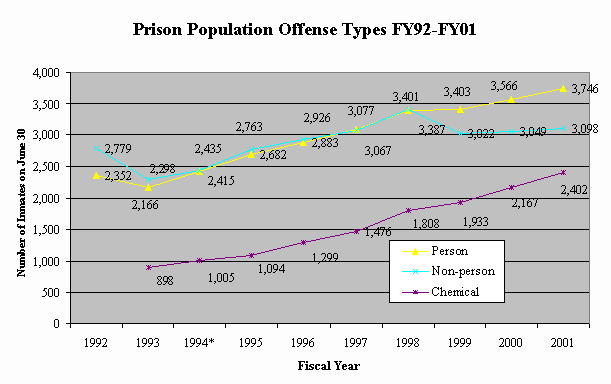
Table 15 shows a broader picture of changes in the prison
population, examining the inmate population by the type of commission offense on
June 30. It shows that, between FY1991 and FY2001, the increase in inmates
committed for persons offenses clearly outstripped that for non-persons
offenses. Note that between 1991 and 1998 there either were more non-persons
offenders in the population than persons offenders or the difference between the
two was slight. Since 1998, however, a change has occurred, with at least 400
more persons offenders imprisoned.
Beginning in FY93, the population also includes a breakdown
of those committed for "chemical offenses," which include drug and alcohol
offenses. Since that time the percentage increase in chemical offenses is much
greater than for either persons or non-persons offenses, and the raw increase in
chemical offenses almost equals that for persons offenses.
|
Table 15
Prison Population Offense Types |
|
Offense Type |
1992 |
1993 |
1994* |
1995 |
1996 |
1997 |
1998 |
1999 |
2000 |
2001 |
% Chg |
96-2001 |
|
Person |
2,352 |
2,166 |
2,415 |
2,682 |
2,883 |
3,077 |
3,387 |
3,403 |
3,566 |
3,746 |
59.3% |
29.9% |
|
Non-person |
2,779 |
2,298 |
2,435 |
2,763 |
2,926 |
3,067 |
3,401 |
3,022 |
3,049 |
3,098 |
11.5% |
5.9% |
|
Chemical |
-- |
898 |
1,005 |
1,094 |
1,299 |
1,476 |
1,808 |
1,933 |
2,167 |
2,402 |
-- |
84.9% |
| *Estimated. Actual
total will be within 5. |
Source: Department of Corrections E-1 Reports. Totals may not equal total
number of inmates in system due to offenders committed for multiple offenses of
different type.
This information is also presented graphically below.
Additional
data are available from the Bureau of Justice Statistics and from the Division
of Criminal and Juvenile Justice Planning (CJJP) with which to compare Iowa and
the Nation. Iowa’s 2001 Inmate Profile shows that Iowa’s prison
population in 2001 consisted of 42 percent violent offenders, 25 percent
property offenders, 24 percent drug offenders, and eight percent public order
offenders. In 1999 (the last year for which figures are available) sentenced
prisoners nationally consisted of 48 percent violent offenders, 21 percent
property offenders, 21 percent drug offenders, and 10 percent public order
offenders (Beck, 2001). This suggests that violent offenders are
under-represented and drug and property offenders slightly over-represented in
the Iowa prison system compared to prison systems in other states. This
over-representation may be characteristic of Midwestern states, however, as they
typically report low rates of violent crime and mid-range rates of property
crime.
National figures also differ from Iowa’s in the types of
offenses resulting in population increases. Nationally, fully 51 percent of the
increase in prison population between 1990 and 1999 consisted of violent
offenders, with drug offenders accounting for 20 percent, property offenders 14
percent, and public-order offenders 15 percent. In Iowa, however, most of the
increase has been due to chemical (drug and alcohol) offenders, whose numbers
have more than doubled since 1993.
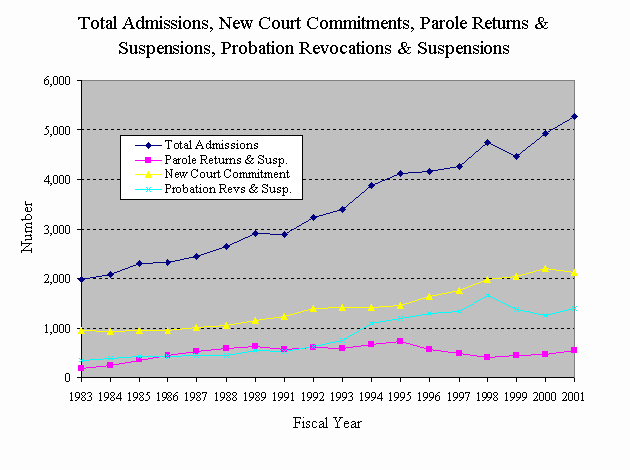
Another look at the prison population is presented in the
graph below, which shows changes in the types of prison admissions since state
FY84. A nearly steady increase in overall admissions has been seen since FY84,
with the only exceptions occurring in 1991 and 1999. The largest total increase
occurred during FY98 (when admissions increased by 485), closely followed by
FY2000 (an increase of 464).
While direct court commitments reached their highest level in
FY2000, both probation and parole revocation admissions continued rising in
FY2001, resulting in a record number of commitments that year. While direct
court commitments have gradually risen over the period, the increase in
probation revocations and suspensions has occurred primarily since 1993, more
than doubling since then, as the probation revocation decreases in FY99 and
FY2000 were not continued in FY2001. The high ratio of probation revocation
admissions means that a significant portion of the prison population has already
had opportunities to avoid incarceration by serving periods of probation in the
community, but that they have failed. This is one of the factors leading to
increased caution on the part of the Board in granting parole.
The FY2001 increase in probation revocations has significance
also because increases in probation revocations have recently been one of the
driving forces behind Iowa’s increasing prison population. Between FY91 and
FY98, probation revocations had increased from 578 to 1,694 (or 193 percent).
During the same period direct court commitments increased from 2,891 to 4,735
(or 64 percent). In FY92 parole revocations and suspensions and probation
revocations were nearly equal. Since then, however, probation revocations and
suspensions have reached a level almost four times that of parole revocations
and suspensions. In FY2001 probation revocations outnumbered parole revocations
by nearly 3:1.
 Source: Department of Corrections E-1 Reports.
Iowa’s trend in parole revocations runs contrary to the national trend.
According to the Bureau of Justice Statistics, parole violators constituted 34
percent of all national prison admissions in 1996, and while 70 percent of
parole terminations in 1984 were termed "successful," in 1996 this percentage
had been reduced to less than half. Iowa, on the other hand, has not shown an
increase in parole revocations, and only 28.4 percent of those released to
parole supervision in FY1996 were revoked from supervision.
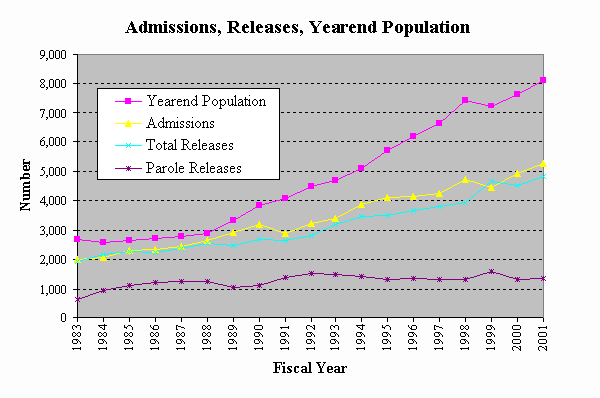
The next graph shows end-of-year prison population, total
admissions, total releases, and parole releases. More than previous tables and
charts, this one shows increasing caution on the part of the Board in protecting
the public. As shown previously in the Workload section, through FY2001 paroles
have accounted for a smaller portion of overall releases in recent years, as the
Board has allowed more inmates to expire sentences rather than granting them
parole. This is consistent with public safety concerns, as Iowa research has
previously shown that some high-risk inmates are best incapacitated for as long
a period as possible to ensure public safety. The net result of this approach is
that, through FY2001, the number of paroles granted has varied little since
1986, when there were 1,216 paroles out of a total prison population of 2,722.
That year, slightly more than half the releases from prison were via parole.
Since that time, with the advent of additional release opportunities such as
work release, paroles as a percentage of all releases have dropped. This trend
continued in FY2001. See page 14 for further
illustration of this trend. Note that figures for this chart come from
Department of Corrections E-1 reports; due to delays in release, rescissions,
and other factors, the number of paroles in this chart do not necessarily agree
with figures presented elsewhere in this report.
 Source: Department of Corrections E-1 Reports.
A final description of the prison population is provided in
Table 16, which shows the distribution of risk levels in the prison population.
This may be compared with tables pertaining to risk levels and parole
decision-making later in the report. The table shows that, of the included
groups of offenders, those serving time for Class A felonies show the lowest
statistical risk. Those serving time for "other felonies" shows the highest
average risk, probably due to the concentration of habitual criminals in that
class. Note also that the misdemeanants tend to have higher risk scores than the
felons. These findings are not particularly surprising, given that the risk
score is based upon offense seriousness and the duration and intensity of the
prior criminal history. Class A felons may be sent to prison based upon the
severity of a single offense, and thus many may have low risk scores. Habitual
criminals nearly always have lengthy criminal histories beyond the three felony
convictions required for conviction as an habitual criminal. Misdemeanants are
usually incarcerated only with lengthy criminal histories or failure to
cooperate on probation.
|
Table 16.
Risk Levels of Prison Population 6/30/2001, by Offense Class |
|
|
LEAD OFFENSE CLASS |
|
|
RISK |
A Felony |
B Felony |
Other Fel. |
C Felony |
D Felony |
Ag. Misd |
Ser. Misd |
Total |
|
Uncoded |
92 |
479 |
90 |
928 |
699 |
116 |
7 |
2,411 |
|
1 |
86 |
128 |
2 |
73 |
5 |
2 |
0 |
296 |
|
2 |
44 |
110 |
22 |
322 |
265 |
44 |
3 |
810 |
|
3 |
43 |
63 |
9 |
93 |
65 |
20 |
2 |
295 |
|
4 |
3 |
27 |
6 |
73 |
93 |
15 |
0 |
217 |
|
5 |
2 |
42 |
43 |
172 |
220 |
26 |
1 |
506 |
|
6 |
64 |
145 |
35 |
319 |
208 |
49 |
2 |
822 |
|
7 |
0 |
10 |
29 |
56 |
88 |
14 |
2 |
199 |
|
8 |
63 |
138 |
59 |
250 |
221 |
43 |
0 |
774 |
|
9 |
118 |
340 |
111 |
451 |
361 |
74 |
9 |
1,464 |
|
Total |
515 |
1,482 |
406 |
2,737 |
2,225 |
403 |
26 |
7,794 |
|
Mean |
5.38 |
5.94 |
6.95 |
5.81 |
5.95 |
6.07 |
6.53 |
5.92 |
| Excludes federal
prisoners, interstate compact, safekeepers, and violator program
participants. |
| Means exclude
uncoded cases. |
VII. SIXTH JUDICIAL DISTRICT
PROBATION PROJECT
During the 1997 legislative session, Governor Branstad
recommended that the legislature authorize the Parole Board’s Administrative
Parole Judges to conduct probation revocation hearings in the Sixth Judicial
District on an experimental basis. The reasons for this recommendation were
two-fold:
To reduce the workload of criminal court judges.
To take advantage of the parole Judges’ correctional
sanctioning expertise.
The General Assembly accepted this recommendation and passed
Senate File 503, which became effective July 1, 1997. The Parole Board began
implementing the statute on that date and held numerous planning sessions with
the Sixth District judges, county attorneys, clerks of court, sheriffs, and
Department of Corrections. Due to an early interpretation of the statute, the
Board not only was charged with handling hearings, but also arrest warrants,
bonds, initial appearances, and appointment of counsel. The Board proceeded
under this interpretation of the law until December 31, 1997, when Sixth
District Court Judge David M. Remley ruled the project invalid. The Parole Board
appealed this decision to the Iowa Supreme Court but dismissed its appeal when
the legislature modified the statute to correct the alleged deficiencies of the
project by passing Senate File 2377, which became effective on May 22, 1998.
A further challenge to the Sixth District project occurred in
1999, resulting in a ruling handed down by District Court Judge L. Vern Robinson
on September 2. Petitioners had both received suspended sentences and had been
placed on probation, only to have the probation later revoked by an
administrative law judge. In this case, as in earlier cases, the petitioners
claimed a lack of due process and equal protection, and also challenged the use
of administrative law judges in revocations on the basis of separation of
powers. The Court determined that the revocation procedure used in the Sixth
Judicial district as set out in section 907.8A was constitutional.
Challenges to the Project’s constitutionality were finally
resolved on February 27, 2002, when the Iowa Supreme Court ruled that the
Project violated the separation-of-powers doctrine of the Iowa Constitution. The
Project ceased operation immediately in response to the Court’s ruling. Although
the Project continued operation into FY2002, this will be the final report on
its activities.
In one respect there was an expansion of the Pilot Project
during FY2001, in that a part-time administrative Law Judge was added to the
project. That judge (referred to here as ALJ #2), who is employed by the
judicial district, conducts face-to-face hearings in the counties other than
Linn and Jones. While that judge also has kept records of cases and
dispositions, he has done it in a manner not entirely comparable with records
for the original judge (ALJ #1). Therefore, their figures will be presented here
separately, with those for ALJ #1 presented first.
Probation revocation hearings held by ALJ #1 in FY2001
remained at about the same level as in FY2000. The monthly distribution of
dispositions for FY2000 and FY2001 is shown on the following page.
|
Table 17.
Sixth District Probation Revocation Project |
|
Dispositions, by Month
|
|
Month
|
FY2000 |
FY2001 |
|
July
|
14 |
26 |
|
August
|
13 |
30 |
|
September
|
15 |
44 |
|
October
|
11 |
13 |
|
November
|
15 |
16 |
|
December
|
25 |
17 |
|
January
|
21 |
18 |
|
February
|
18 |
10 |
|
March
|
18 |
16 |
|
April
|
27 |
16 |
|
May
|
28 |
11 |
|
June
|
23 |
13 |
|
Total
|
228 |
230 |
The distribution of hearing dispositions for Judge #1 is
shown in the chart below.
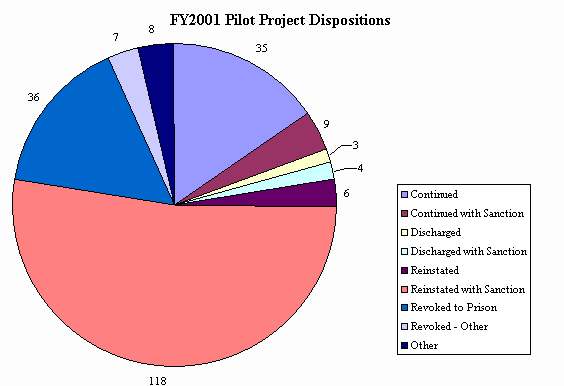
A comparison of dispositions for FY2000 and FY2001 show many similarities.
First, the number of dispositions handed down by ALJ #1 was almost identical to
the previous year. The patterns were also similar, although continuations with
sanction dropped and continuations without sanction dropped. Generally,
dispositions in FY2001 tended to involve fewer sanctions.
|
Table 18.
Comparison: Pilot Project Dispositions FY2001 vs. FY2000 |
|
Disposition |
FY2000 |
FY2001 |
% Chng. |
|
Continued |
15 |
35 |
133.3% |
|
Continued with Sanction |
24 |
9 |
-62.5% |
|
Discharged |
3 |
3 |
0.0% |
|
Discharged with Sanction |
-- |
4 |
-- |
|
Reinstated |
5 |
6 |
20.0% |
|
Reinstated with Sanction |
133 |
118 |
-11.3% |
|
Revoked to Prison |
36 |
36 |
0.0% |
|
Revoked – Other |
6 |
7 |
16.7% |
|
Other |
5 |
8 |
60.0% |
|
Total Disposed |
227 |
226 |
-0.4% |
The distribution of sanctions handed down in these
dispositions is shown below. It should be remembered that there may be multiple
sanctions within a single disposition, so there is overlap in the numbers. The
most common sanction was referral to jail (76 individuals, or 50 percent of the
dispositions). Fifty dispositions (33 percent) involved placement in residential
facilities (the Hinzman Center, Hope House, or the Nelson Center). Nine
individuals were referred to Violator Programs operated by the Department of
Corrections, eight were referred to treatment, and eight had their probations
extended.
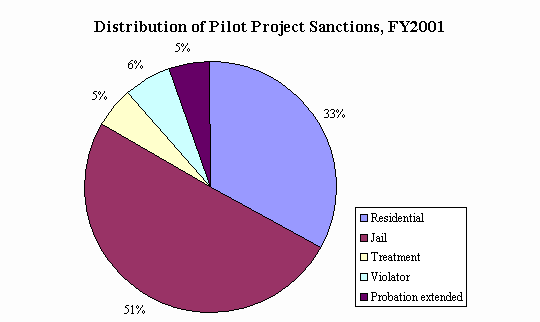
The establishment of a second (part-time) administrative law
judge to handle cases in Johnson, Tama, Iowa, and Benton Counties has expanded
the capability of the Pilot Project to handle revocation hearings in a more
traditional manner but without involvement of the judiciary. From appointment of
the second administrative law judge until the end of FY01, 94 dispositions have
been handed down in these counties. The pattern of dispositions is shown below.
Note that a single disposition may involve multiple sanctions.
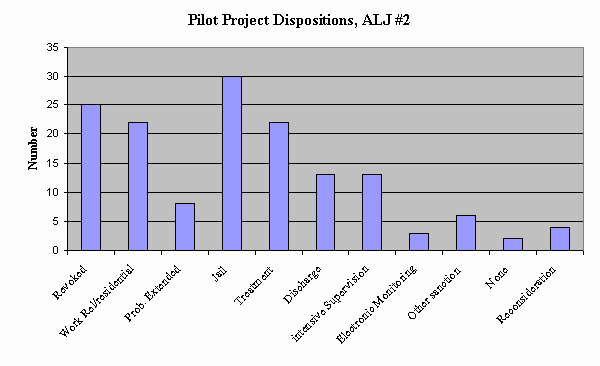
Another
feature of the database maintained by ALJ #2 that it permits comparison of his
decision with the recommendations of probation officers (PO’s) and defense
attorneys. This is presented in the table below.
|
Table 19.
ALJ #2 Agreement with Recommendations |
|
Judge |
Recommendation of: |
|
Action |
PO |
Defense |
|
Judge more severe |
16.5% |
34.9% |
|
Agreement |
60.0% |
63.9% |
|
Judge less severe |
23.5% |
1.2% |
|
Total N |
85 |
83 |
| Total N’s differ
because recommendations were not available in all cases |
It is apparent that there tends to be agreement between the
judge, probation officer, and defense a majority of the time in these revocation
hearings. While the judge has shown a slightly higher level of agreement with
the defense, it should also be noted that in slightly more than 1/3 of the cases
the judge orders a disposition more severe than desired by the defense. While
agreement with probation officers is slightly lower (at 60 percent), note that
there are cases in which his sanctions have been more severe than
requested by probation officers.
In making corrections to the original statute enabling
establishment of the Pilot Project, the General Assembly also required an
evaluation by the Division of Criminal and Juvenile Justice Planning that was
released in February, 2002. While the evaluation did not make a specific
recommendation pertaining to continuation or expansion of the project, it
pointed to a number of project accomplishments. A number of interview
respondents who were initially opposed to the project – including several judges
– then supported continuation. Even some who opposed the project agreed that it
achieved one of its goals in reducing judicial involvement in probation
revocations.
VIII. TIME SERVED PRIOR TO
PAROLE
A number of factors affect the amount of time individuals
spend incarcerated prior to release on parole. The most obvious of these is the
inmate’s maximum term of incarceration, which in Iowa is set by statute. There
appears to be some public misunderstanding of prison terms in Iowa, in part
because of the indeterminate nature of the State’s sentencing structure. Three
groups set terms of incarceration in Iowa:
the Legislature, which establishes maximum terms of
incarceration and may choose to require either mandatory incarceration or a
mandatory minimum term of incarceration;
judges, who in sentencing determine who is incarcerated and
who is not (and after imprisonment may choose to release an offender on "shock
probation" after a period of up to three months); and
the Board of Parole, which determines when offenders may be
released on work release and/or parole.
Indeterminate sentencing is also misunderstood because when a
judge sentences an offender to a specific term -- say, ten years of
incarceration -- the sentence, absent a mandatory minimum, is actually
zero-to-ten years, and the offender may be legally paroled at any time after
reception by the prison system. Additionally, under Iowa’s "good time" statute,
most offenders’ sentences are also reduced by up to half by good behavior in the
prison system, so most ten-year sentences will expire in about five years.
There have been a number of changes in Iowa statutes in
recent years whose effect has been to raise the prison population. Most of these
either increase the maximum penalty for an offense or delay the time at which
the Board of Parole may consider inmates for release. These include:
a requirement that inmates sentenced for Murder-2nd,
Attempted Murder, Sex Abuse-2nd, Sex Abuse-3rd, Kidnapping-2nd,
Robbery-1st, and Robbery-2nd serve 85 percent of their maximum terms of
incarceration prior to release;
lengthening the maximum term of incarceration for some
drug, weapons, sex, OWI, and child endangerment offenses;
the establishment of mandatory release supervision
following imprisonment for those convicted of Lascivious Acts (Iowa Code
709.8).
Three legislative efforts took place in 2001 to help stem the
tide of the rising prison population:
the creation of a new class of burglaries -- Burglary in
the Third Degree as a first offender -- Iowa’s first misdemeanor burglary
offense;
the creation of a determinate Class D sentencing structure
that allows judges to sentence Class D felons to a determinate term of zero to
five years rather than the historic indeterminate term of up to five years;
the lengthening of time during which judges can reconsider
a sentence.
Another factor influencing the size of the prison population
has been the Board’s increasing caution in releasing inmates who may pose a
threat to society. The use of risk assessment in release deliberations has had
two distinct effects: to hasten release of good risks who do not need to be
incarcerated for reasons of public safety; and to delay release of bad risks who
present a threat to society. Appendix 5 shows mean
time to parole by offense class by risk. Delaying release of high-risk inmates
is one of the factors responsible for low recidivism among Iowa parolees.
The Board’s caution is also illustrated in Appendix 6, which
shows percentages of offenders released in FY2001 via either parole or
expiration. Appendix 7 shows this same information specifically for sex
offenders.
Table 20 presents an overview of paroling activity during
FY2001, showing the amount of time served prior to parole for all offenses
accounting for ten or more paroles. Readers interested in offenses not on the
table are urged to consult Table 21, which presents all offenses for which there
were paroles in FY2001.
|
Table 20.
Time Served Prior to Parole Approval |
|
FY2001 Overview |
|
Offense |
|
|
Mean Months |
|
Class |
Primary Offense |
Number |
Served |
|
Property Offenses |
|
Habitual |
Habitual Offender - Property |
46 |
53.2 |
|
Class C |
Burglary - Second Degree |
85 |
47.9 |
|
Class C |
Theft - First Degree |
112 |
38.5 |
|
Class D |
Burglary - Third Degree |
256 |
20.8 |
|
Class D |
Forgery |
181 |
21.7 |
|
Class D |
Theft - Second Degree |
144 |
20.7 |
|
Agg Misd |
Attempted Burglary - Third
Degree |
14 |
8.7 |
|
Agg Misd |
Operating Motor Vehicle w/o
Owner's Consent |
31 |
8.3 |
|
Agg Misd |
Theft - Third Degree |
61 |
9.4 |
|
Crimes Against Persons |
|
|
Class B |
Robbery - First Degree |
37 |
105.5 |
|
Class B |
Sex Abuse - Second |
10 |
96.3 |
|
Class C |
Robbery - Second |
20 |
67.9 |
|
Class C |
Sexual Abuse - Third Degree |
16 |
50.6 |
|
Class C |
Willful Injury |
30 |
47.2 |
|
Class D |
Assault in Felony-no injury |
14 |
22.7 |
|
Class D |
Lascivious Acts with a Child |
10 |
33.1 |
|
Class D |
Going Armed with Intent |
16 |
28.2 |
|
Agg. Misd |
Domestic Abuse - Second SI or SE |
10 |
10.7 |
|
Agg. Misd |
Assault
W/Intent to Cause Serious Injury |
10 |
8.0 |
| |
Drug/Alcohol Offenses |
|
|
Class B |
Prohibited Acts
Manufacture/Delivery |
23 |
52.0 |
|
Class C |
Manufacture/Delivery Counterfeit
Narcotics |
10 |
63.7 |
|
Class C |
Manufacture/Delivery Controlled
Substance |
431 |
28.8 |
|
Class D |
Failure Obtain Controlled
Substance Tax Stamp |
34 |
14.2 |
|
Class D |
Manufacture/Delivery
Marijuana<50 Kilos |
81 |
15.4 |
|
Class D |
OWI - Third Offense |
773 |
11.1 |
|
Class D |
Prohibited Acts-Substances |
29 |
11.6 |
|
Agg Misd |
OWI - Second Offense |
91 |
5.8 |
| |
Other Offenses |
|
|
ODRUG |
Controlled Substance - Second or
Sub. Offense |
16 |
56.1 |
|
Class D |
Receive, Transport,
Possess.Firearms by Felon |
35 |
20.1 |
|
Agg Misd |
Driving while Barred |
37 |
8.9 |
| |
|
|
|
|
ALL PAROLES |
3,000 |
24.0 |
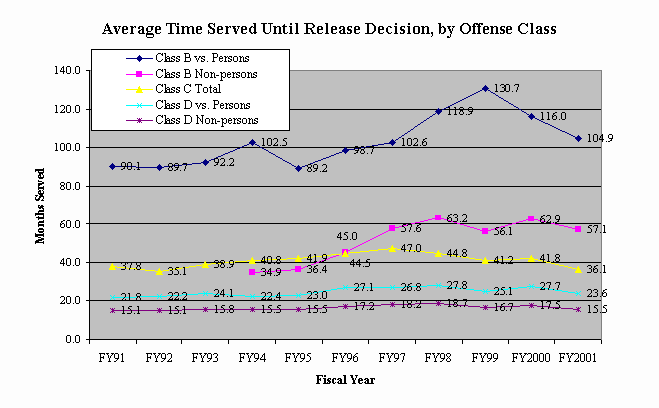 Note:
There is little difference in average time served for Class C felonies
against persons or not against persons. Therefore only the total for Class C
felonies is presented here. The upward trend in Class B felonies not against
persons through FY98 is undoubtedly due to their recent creation;
particularly during FY94-96, only the very best candidates in the category
were paroled, resulting in an unusually short length-of-stay. Note:
There is little difference in average time served for Class C felonies
against persons or not against persons. Therefore only the total for Class C
felonies is presented here. The upward trend in Class B felonies not against
persons through FY98 is undoubtedly due to their recent creation;
particularly during FY94-96, only the very best candidates in the category
were paroled, resulting in an unusually short length-of-stay.
Table 21, n the pages following, presents a complete
itemization of paroles for FY2001, listing the felony class, the specific
offense, whether or not consecutive sentences were involved, the number of
paroles approved during the year, and the maximum, minimum, and mean periods
from admission to parole approval. In an effort to avoid redundancy the table
does not list a total separately when all of the paroles for a certain
offense either did or did not involve consecutive sentences. For example, the
one parole for robbery under the old criminal code involved a consecutive
sentence, so the column for consecutive sentences notes "Y/Total" to note that
the numbers for the total and for the consecutive sentence category were the
same. Similarly, all the five paroles for Murder in the Second Degree in the
Class B Felony category did not involve consecutive sentences, so they are all
listed as "N/Total."
|
Table 21.
FY 2001 Months Served Prior to Parole Approval |
|
Offense Class |
Offense Description |
Consecutive |
Number |
Mean |
Minimum |
Maximum |
| B Felony |
Murder in the
Second Degree |
N/total |
5 |
132.5 |
62.3 |
185.3 |
|
50 Year Terms |
Old Code-Robbery
with Aggravation |
Y/total |
1 |
280.8 |
280.8 |
280.8 |
|
|
Total 50 Yr B Felony |
Total |
6 |
157.2 |
62.3 |
280.8 |
|
B Felony |
Arson in the
First Degree |
N |
1 |
53.2 |
53.2 |
53.2 |
| |
|
Y |
1 |
98.2 |
98.2 |
98.2 |
| |
|
Total |
2 |
75.7 |
53.2 |
98.2 |
| |
Attempt to Commit
Murder |
N/Total |
7 |
95.5 |
59.1 |
154.4 |
| |
Burglary in the
First Degree |
N |
4 |
90.5 |
34.9 |
137.7 |
| |
|
Y |
4 |
125.8 |
111.9 |
160.9 |
| |
|
Total |
8 |
108.1 |
34.9 |
160.9 |
| |
Distribution of a
Controlled Subs. to < Age 18 |
N/Total |
3 |
50.6 |
43.7 |
55.5 |
| |
Kidnapping in the
Second Degree |
N |
1 |
100.4 |
100.4 |
100.4 |
| |
|
Y |
1 |
132.9 |
132.9 |
132.9 |
| |
|
Total |
2 |
116.7 |
100.4 |
132.9 |
| |
Manufact. and
Deliv. of a Counterfeit CF or Su |
N/Total |
4 |
91.5 |
62.8 |
108.5 |
| |
Prohibited Acts
Manufact. and Deliv. of C.S. |
N/Total |
23 |
52.0 |
26.5 |
84.8 |
| |
Robbery in the
First Degree |
N |
29 |
94.8 |
60.0 |
229.1 |
| |
|
Y |
8 |
144.2 |
107.1 |
200.8 |
| |
|
Total |
37 |
105.5 |
60.0 |
229.1 |
| |
Sexual Abuse in
the Second Degree |
N |
8 |
95.2 |
61.0 |
148.8 |
| |
|
Y |
2 |
101.0 |
97.0 |
104.9 |
| |
|
Total |
10 |
96.3 |
61.0 |
148.8 |
|
|
Total B Felony |
Total |
96 |
88.5 |
26.5 |
229.1 |
|
Other Felony |
Controlled
Substance-Second or Subs. Offense |
N |
13 |
56.0 |
12.9 |
106.4 |
| |
|
Y |
3 |
56.6 |
48.6 |
68.8 |
| |
|
Total |
16 |
56.1 |
12.9 |
106.4 |
| |
Controlled
Substance Violation/Firearm |
N/Total |
3 |
48.4 |
44.8 |
52.7 |
| |
Distribution of a Controlled Subst - School/Park |
N |
4 |
31.8 |
29.5 |
36.5 |
| |
|
Y |
2 |
65.0 |
47.8 |
82.2 |
|
|
|
Total |
6 |
42.9 |
29.5 |
82.2 |
| |
Manufact. and
Deliv. of a Counterf. CF or Si |
Y/Total |
1 |
99.0 |
99.0 |
99.0 |
| |
Total Other Felony |
Total |
26 |
52.4 |
12.9 |
106.4 |
|
Habitual |
Habitual Offender
- Person |
N |
4 |
59.9 |
47.9 |
72.9 |
| |
|
Y |
5 |
132.5 |
88.7 |
219.2 |
| |
|
Total |
9 |
100.3 |
47.9 |
219.2 |
| |
Habitual Offender
- Property |
N |
39 |
50.9 |
16.1 |
101.3 |
| |
|
Y |
7 |
65.7 |
33.1 |
137.7 |
| |
|
Total |
46 |
53.2 |
16.1 |
137.7 |
|
|
Total Habitual |
Total |
55 |
60.9 |
16.1 |
219.2 |
|
Offense Class |
Offense Description |
Consecutive |
Number |
Mean |
Minimum |
Maximum |
|
C Felony |
Arson in the
Second Degree |
N |
15 |
34.8 |
23.4 |
58.0 |
| |
|
Y |
2 |
59.1 |
47.8 |
70.3 |
| |
|
Total |
17 |
37.7 |
23.4 |
70.3 |
| |
Burglary in the
Second Degree |
N |
60 |
35.4 |
11.0 |
89.5 |
| |
|
Y |
25 |
77.9 |
4.0 |
182.1 |
| |
|
Total |
85 |
47.9 |
4.0 |
182.1 |
|
|
Child
Endangerment Serious Injury |
N/Total |
8 |
40.3 |
18.5 |
51.3 |
| |
Conspiracy to
Commit a Forcible Felony |
N |
3 |
36.5 |
12.0 |
49.4 |
| |
|
Y |
1 |
31.6 |
31.6 |
31.6 |
| |
|
Total |
4 |
35.3 |
12.0 |
49.4 |
| |
Controlled
Substance Violation/Firearm |
N/Total |
1 |
15.4 |
15.4 |
15.4 |
| |
Criminal Mischief
in the First Degree |
Y/Total |
1 |
62.3 |
62.3 |
62.3 |
| |
Dist. of a
Schedule III Controlled Sub < 18 |
N/Total |
1 |
11.7 |
11.7 |
11.7 |
| |
Fraud Practices
in the First Degree |
N |
2 |
28.8 |
23.4 |
34.2 |
| |
|
Y |
1 |
68.6 |
68.6 |
68.6 |
| |
|
Total |
3 |
42.1 |
23.4 |
68.6 |
| |
Homicide by
Vehicle OWI or Reckless |
N |
8 |
50.4 |
42.2 |
74.0 |
| |
|
Y |
1 |
63.7 |
63.7 |
63.7 |
| |
|
Total |
9 |
51.9 |
42.2 |
74.0 |
| |
Kidnapping in the
Third Degree |
N/Total |
6 |
35.4 |
24.2 |
51.8 |
| |
Manuf. and Deliv.
Controlled Substance, |
N |
364 |
26.6 |
7.2 |
90.6 |
| |
|
Y |
67 |
40.5 |
11.3 |
98.7 |
| |
|
Total |
431 |
28.8 |
7.2 |
98.7 |
| |
Manufacture and
Delivery of a Counterfeit |
N |
6 |
51.0 |
17.4 |
88.5 |
| |
|
Y |
4 |
82.8 |
61.6 |
96.0 |
| |
|
Total |
10 |
63.7 |
17.4 |
96.0 |
| |
Neglect or Abandon
Dependent Person |
N |
3 |
40.7 |
29.2 |
51.5 |
| |
|
Y |
1 |
83.5 |
83.5 |
83.5 |
| |
|
Total |
4 |
51.4 |
29.2 |
83.5 |
| |
Receive Precursor
Substance |
N/Total |
1 |
22.8 |
22.8 |
22.8 |
| |
Reckless Use of
Firearm |
N/Total |
1 |
27.1 |
27.1 |
27.1 |
| |
Robbery in the
Second Degree |
N |
12 |
53.1 |
28.1 |
78.2 |
| |
|
Y |
8 |
90.1 |
46.9 |
165.4 |
| |
|
Total |
20 |
67.9 |
28.1 |
165.4 |
| |
Sexual Abuse in
the Third Degree |
N |
15 |
48.2 |
25.7 |
65.8 |
| |
|
Y |
1 |
86.6 |
86.6 |
86.6 |
| |
|
Total |
16 |
50.6 |
25.7 |
86.6 |
| |
Sexual Abuse-Third
Degree Not Forcible |
N/Total |
9 |
41.8 |
16.5 |
53.8 |
| |
Terrorism w/intent
to provoke |
N |
4 |
28.6 |
13.4 |
40.0 |
| |
|
Y |
1 |
53.9 |
53.9 |
53.9 |
| |
|
Total |
5 |
33.7 |
13.4 |
53.9 |
| |
Theft in the First
Degree |
N |
88 |
34.1 |
4.4 |
81.0 |
| |
|
Y |
24 |
55.0 |
16.3 |
188.2 |
| |
|
Total |
112 |
38.5 |
4.4 |
188.2 |
| |
Violation of
Pharmacy Provisions |
Y/Total |
1 |
73.0 |
73.0 |
73.0 |
| |
Voluntary
Manslaughter |
Y/Total |
1 |
117.8 |
117.8 |
117.8 |
| |
Willful Injury |
N |
22 |
38.5 |
24.0 |
73.6 |
| |
|
Y |
8 |
70.9 |
38.6 |
123.1 |
| |
|
Total |
30 |
47.2 |
24.0 |
123.1 |
|
|
Class C Felony Total |
Total |
775 |
36.1 |
4.0 |
188.2 |
|
Offense Class |
Offense Description |
Consecutive |
Number |
Mean |
Minimum |
Maximum |
|
D Felony |
Asslt While
Particip. in a Felony No Injury |
N |
9 |
16.3 |
7.9 |
25.0 |
| |
|
Y |
5 |
34.1 |
22.4 |
48.3 |
| |
|
Total |
14 |
22.7 |
7.9 |
48.3 |
| |
Asslt W/Int. to
Commit Sex Abuse-Injury |
N/Total |
1 |
25.2 |
25.2 |
25.2 |
| |
Assault-Serious
Injury |
N/Total |
1 |
15.3 |
15.3 |
15.3 |
| |
Assaulting a Peace
Officer With Intent |
N/Total |
2 |
27.8 |
20.1 |
35.5 |
| |
Att. Disarm Peace
Officer |
N/Total |
1 |
15.9 |
15.9 |
15.9 |
| |
Attempted
Burglary in the Second Degree |
N |
3 |
10.8 |
7.6 |
12.6 |
| |
|
Y |
1 |
23.9 |
23.9 |
23.9 |
| |
|
Total |
4 |
14.1 |
7.6 |
23.9 |
| |
Burglary in the
Third Degree |
N |
197 |
17.0 |
6.2 |
48.0 |
| |
|
Y |
59 |
33.3 |
10.6 |
89.0 |
| |
|
Total |
256 |
20.8 |
6.2 |
89.0 |
| |
Conspire to Commit
a Felony (Non-Person) |
N/Total |
9 |
17.9 |
12.4 |
26.2 |
| |
Criminal Mischief
in the Second Degree |
N |
10 |
24.2 |
13.5 |
44.4 |
| |
|
Y |
3 |
23.3 |
11.4 |
35.5 |
| |
|
Total |
13 |
24.0 |
11.4 |
44.4 |
| |
Domestic Abuse
Assault 3rd or Subsequent |
N |
6 |
17.1 |
8.2 |
24.3 |
| |
|
Y |
1 |
20.3 |
20.3 |
20.3 |
| |
|
Total |
7 |
17.6 |
8.2 |
24.3 |
| |
Eluding >25 mph
w/enhancements |
N |
1 |
16.0 |
16.0 |
16.0 |
| |
|
Y |
1 |
8.6 |
8.6 |
8.6 |
| |
|
Total |
2 |
12.3 |
8.6 |
16.0 |
| |
Escape or Absence
of a Felon |
N |
1 |
12.2 |
12.2 |
12.2 |
| |
|
Y |
1 |
14.4 |
14.4 |
14.4 |
| |
|
Total |
2 |
13.3 |
12.2 |
14.4 |
| |
Extortion |
N |
7 |
17.5 |
7.5 |
32.8 |
| |
|
Y |
2 |
28.7 |
24.8 |
32.5 |
| |
|
Total |
9 |
20.0 |
7.5 |
32.8 |
| |
Failure to Appear
for a Felony |
N |
4 |
20.6 |
11.0 |
33.0 |
| |
|
Y |
2 |
22.9 |
7.2 |
38.6 |
| |
|
Total |
6 |
21.4 |
7.2 |
38.6 |
| |
Failure to
Comply-2nd |
N/Total |
1 |
21.3 |
21.3 |
21.3 |
| |
Failure to Obtain
a Cont.Subs.Tax Stamp |
N |
28 |
13.2 |
6.5 |
44.6 |
| |
|
Y |
6 |
19.0 |
8.2 |
31.9 |
| |
|
Total |
34 |
14.2 |
6.5 |
44.6 |
| |
Forgery |
N |
141 |
18.3 |
3.5 |
51.1 |
| |
|
Y |
40 |
33.7 |
8.9 |
87.4 |
| |
|
Total |
181 |
21.7 |
3.5 |
87.4 |
| |
Fraudulent
Practices in the Second Degree |
N |
10 |
18.7 |
7.5 |
30.8 |
| |
|
Y |
1 |
12.3 |
12.3 |
12.3 |
| |
|
Total |
11 |
18.1 |
7.5 |
30.8 |
| |
Furnishing
Controlled Substance to Inmates |
N/Total |
1 |
19.0 |
19.0 |
19.0 |
| |
Gatherings -
Controlled Substance Used |
N |
4 |
12.1 |
7.1 |
17.3 |
| |
|
Y |
1 |
11.7 |
11.7 |
11.7 |
| |
|
Total |
5 |
12.0 |
7.1 |
17.3 |
| |
Going Armed With
Intent |
N |
14 |
20.7 |
7.9 |
51.5 |
| |
|
Y |
5 |
42.3 |
19.2 |
66.8 |
| |
|
Total |
19 |
26.4 |
7.9 |
66.8 |
|
Offense Class |
Offense Description |
Consecutive |
Number |
Mean |
Minimum |
Maximum |
| |
Interference with
Official Acts |
N |
1 |
23.1 |
23.1 |
23.1 |
| |
|
Y |
2 |
36.5 |
30.1 |
43.0 |
| |
|
Total |
3 |
32.1 |
23.1 |
43.0 |
| |
Lascivious Acts
With a Child |
N |
6 |
20.5 |
7.5 |
35.1 |
| |
|
Y |
4 |
51.9 |
34.5 |
71.4 |
| |
|
Total |
10 |
33.1 |
7.5 |
71.4 |
| |
Manuf. and Deliv.
of Marijuana < 50 Kilos |
N |
68 |
13.9 |
3.1 |
43.2 |
| |
|
Y |
13 |
23.3 |
11.8 |
38.1 |
| |
|
Total |
81 |
15.4 |
3.1 |
43.2 |
| |
Operating Under
the Influence-Third |
N |
703 |
9.3 |
1.8 |
48.9 |
| |
|
Y |
70 |
29.0 |
2.6 |
106.1 |
| |
|
Total |
773 |
11.1 |
1.8 |
106.1 |
| |
Perjury, Contrad.
Statements and Retraction |
N/Total |
3 |
10.7 |
7.6 |
15.8 |
| |
Pimping |
N/Total |
1 |
27.6 |
27.6 |
27.6 |
| |
Possession of a
Cont. Subs. W/o RX |
N |
9 |
15.1 |
8.0 |
37.6 |
| |
|
Y |
1 |
35.8 |
35.8 |
35.8 |
| |
|
Total |
10 |
17.2 |
8.0 |
37.6 |
| |
Prohibited Acts -
Premises Violation |
N/Total |
1 |
36.1 |
36.1 |
36.1 |
| |
Prohibited Acts -
Substances |
N |
27 |
11.1 |
6.3 |
27.7 |
| |
|
Y |
2 |
19.4 |
7.2 |
31.5 |
| |
|
Total |
29 |
11.6 |
6.3 |
31.5 |
| |
Prohibited Sales
of Tickets |
N/Total |
1 |
11.7 |
11.7 |
11.7 |
| |
Rec, Trans, and
Poss Firearms by Felon |
N |
23 |
16.6 |
7.5 |
46.0 |
| |
|
Y |
12 |
26.7 |
11.5 |
57.3 |
| |
|
Total |
35 |
20.1 |
7.5 |
57.3 |
| |
Serious Injury By
a Motor Vehicle |
N |
3 |
15.9 |
7.6 |
21.7 |
| |
|
Y |
2 |
28.9 |
22.3 |
35.6 |
| |
|
Total |
5 |
21.1 |
7.6 |
35.6 |
| |
Soliciting to
Commit a Felony (Non-Pers) |
N/Total |
3 |
16.8 |
13.5 |
19.3 |
| |
Stalking |
N/Total |
3 |
19.2 |
17.9 |
20.9 |
| |
Stalking - Third
or Subsequent Offense |
N/Total |
1 |
37.9 |
37.9 |
37.9 |
| |
Terrorism |
N |
2 |
11.6 |
8.4 |
14.8 |
| |
|
Y |
2 |
36.4 |
35.7 |
37.1 |
| |
|
Total |
4 |
24.0 |
8.4 |
37.1 |
| |
Theft in the
Second Degree |
N |
121 |
17.3 |
6.3 |
45.4 |
| |
|
Y |
23 |
38.4 |
8.1 |
79.5 |
| |
|
Total |
144 |
20.7 |
6.3 |
79.5 |
| |
Threats |
N/Total |
1 |
17.8 |
17.8 |
17.8 |
| |
Trafficking in
Stolen Weapons |
N |
2 |
15.2 |
8.9 |
21.5 |
| |
|
Y |
1 |
42.1 |
42.1 |
42.1 |
| |
|
Total |
3 |
24.2 |
8.9 |
42.1 |
| |
Unauth.
Possession of Offensive Weapon |
N/Total |
3 |
16.0 |
13.6 |
18.5 |
| |
Unauthorized Use
of Credit Cards |
N |
1 |
13.4 |
13.4 |
13.4 |
| |
|
Y |
1 |
13.1 |
13.1 |
13.1 |
| |
|
Total |
2 |
13.2 |
13.1 |
13.4 |
| |
Willful Injury
w/bodily Injury |
N |
3 |
9.9 |
6.5 |
14.9 |
| |
|
Y |
2 |
12.0 |
12.0 |
12.1 |
| |
|
Total |
5 |
10.7 |
6.5 |
14.9 |
|
|
Total D Felony |
Total |
1,701 |
15.9 |
1.8 |
106.1 |
|
Offense Class |
Offense Description |
Consecutive |
Number |
Mean |
Minimum |
Maximum |
|
Agg Misd. |
Alch. Chapter 123
3rd & Subsequent |
N |
9 |
8.5 |
4.3 |
17.5 |
| |
|
Y |
2 |
7.4 |
3.5 |
11.4 |
| |
|
Total |
11 |
8.3 |
3.5 |
17.5 |
| |
Assault Hate
Crime - Bodily Injury |
N/Total |
1 |
6.3 |
6.3 |
6.3 |
| |
Assault With
Intent to Inflict Serious Injury |
N |
7 |
6.2 |
3.4 |
9.2 |
| |
|
Y |
3 |
12.1 |
5.1 |
19.6 |
| |
|
Total |
10 |
8.0 |
3.4 |
19.6 |
| |
Assault With a
Weapon |
N |
5 |
5.8 |
3.8 |
9.2 |
| |
|
Y |
2 |
11.5 |
10.6 |
12.5 |
| |
|
Total |
7 |
7.5 |
3.8 |
12.5 |
| |
Assaulting a
Peace Officer with Intent |
N/Total |
2 |
7.7 |
6.9 |
8.4 |
| |
Attempted
Burglary in the Third Degree |
N |
11 |
6.2 |
3.2 |
9.8 |
| |
|
Y |
3 |
17.8 |
13.3 |
25.1 |
| |
|
Total |
14 |
8.7 |
3.2 |
25.1 |
| |
Carrying Weapons |
N |
2 |
4.3 |
3.9 |
4.7 |
| |
|
Y |
1 |
10.9 |
10.9 |
10.9 |
| |
|
Total |
3 |
6.5 |
3.9 |
10.9 |
| |
Child
Endangerment No Injury |
N |
3 |
6.8 |
5.4 |
8.0 |
| |
|
Y |
1 |
7.5 |
7.5 |
7.5 |
| |
|
Total |
4 |
7.0 |
5.4 |
8.0 |
| |
Criminal Mischief
in the Third Degree |
N |
8 |
6.6 |
3.0 |
9.2 |
| |
|
Y |
2 |
8.9 |
3.0 |
14.7 |
| |
|
Total |
10 |
7.1 |
3.0 |
14.7 |
| |
Domestic Abuse
Assault Second Si or Se |
N |
8 |
8.0 |
3.8 |
10.4 |
| |
|
Y |
2 |
21.4 |
11.7 |
31.0 |
| |
|
Total |
10 |
10.7 |
3.8 |
31.0 |
| |
Domestic Abuse
Assault, Intent or Weapon |
N |
3 |
8.4 |
5.5 |
12.5 |
| |
|
Y |
1 |
37.5 |
37.5 |
37.5 |
| |
|
Total |
4 |
15.7 |
5.5 |
37.5 |
| |
Driving Motor
Vehicle While Barred |
N |
23 |
5.3 |
2.5 |
9.4 |
| |
|
Y |
14 |
14.8 |
6.5 |
28.8 |
| |
|
Total |
37 |
8.9 |
2.5 |
28.8 |
| |
Eluding/Attempted
Eluding >25 mph |
N/Total |
1 |
3.2 |
3.2 |
3.2 |
| |
Forgery |
N |
4 |
7.1 |
3.7 |
11.2 |
| |
|
Y |
1 |
16.6 |
16.6 |
16.6 |
| |
|
Total |
5 |
9.0 |
3.7 |
16.6 |
| |
Harassment |
Y/Total |
1 |
16.5 |
16.5 |
16.5 |
| |
Indecent Contact
With a Child |
N/Total |
1 |
5.7 |
5.7 |
5.7 |
| |
Interference with
Official Acts |
Y/Total |
1 |
8.2 |
8.2 |
8.2 |
| |
Operating Motor
Vehicle W/o Consent |
N |
18 |
6.3 |
1.2 |
10.9 |
| |
|
Y |
13 |
11.0 |
4.6 |
20.0 |
| |
|
Total |
31 |
8.3 |
1.2 |
20.0 |
| |
Operating Under
the Influence-Second |
N |
82 |
5.4 |
2.6 |
20.1 |
| |
|
Y |
9 |
9.2 |
3.6 |
17.3 |
| |
|
Total |
91 |
5.8 |
2.6 |
20.1 |
| |
Possession of
Marijuana >2nd offense |
N |
2 |
5.6 |
3.4 |
7.8 |
| |
|
Y |
2 |
12.6 |
12.6 |
12.6 |
| |
|
Total |
4 |
9.1 |
3.4 |
12.6 |
|
Offense Class |
Offense Description |
Consecutive |
Number |
Mean |
Minimum |
Maximum |
| |
Poss. of a Cont.
Subs. Without RX |
N |
4 |
7.8 |
5.9 |
10.4 |
| |
|
Y |
3 |
10.9 |
7.8 |
16.5 |
| |
|
Total |
7 |
9.1 |
5.9 |
16.5 |
| |
Preventing
Apprehension, Obst. Prosec. |
N/Total |
1 |
4.1 |
4.1 |
4.1 |
| |
Prohibited Acts -
Premises Violation |
N |
3 |
4.4 |
3.8 |
5.3 |
| |
|
Y |
1 |
7.3 |
7.3 |
7.3 |
| |
|
Total |
4 |
5.1 |
3.8 |
7.3 |
| |
Prostitution |
N |
5 |
7.5 |
4.5 |
11.3 |
| |
|
Y |
1 |
8.0 |
8.0 |
8.0 |
| |
|
Total |
6 |
7.6 |
4.5 |
11.3 |
| |
Riot |
Y/Total |
1 |
14.4 |
14.4 |
14.4 |
| |
Tampering With
Witness or Juror |
Y/Total |
1 |
9.2 |
9.2 |
9.2 |
| |
Theft in the
Third Degree |
N |
41 |
5.9 |
2.9 |
13.4 |
| |
|
Y |
20 |
16.6 |
2.1 |
48.1 |
| |
|
Total |
61 |
9.4 |
2.1 |
48.1 |
| |
Unauthorized Use
of Credit Cards |
N |
2 |
4.5 |
2.3 |
6.7 |
| |
|
Y |
1 |
15.8 |
15.8 |
15.8 |
| |
|
Total |
3 |
8.3 |
2.3 |
15.8 |
|
|
Total Aggravated Misdemeanor |
Total |
331 |
7.9 |
1.2 |
48.1 |
|
Ser. Misd |
Alcoholic
Beverage Control |
Y/Total |
1 |
9.2 |
9.2 |
9.2 |
| |
Criminal Mischief
in the Fourth Degree |
Y/Total |
1 |
8.7 |
8.7 |
8.7 |
| |
Eluding Pursuing
Law Enforcement |
Y/Total |
1 |
15.2 |
15.2 |
15.2 |
| |
Escape or Absence
of a Misdemeanant |
Y/Total |
1 |
6.1 |
6.1 |
6.1 |
| |
Escape or
Voluntary Absence from Custody |
Y/Total |
1 |
4.4 |
4.4 |
4.4 |
| |
Interference With
Official Acts - Injury |
N/Total |
1 |
4.6 |
4.6 |
4.6 |
| |
Operating Under
the Influence-First |
Y/Total |
2 |
8.1 |
6.9 |
9.3 |
| |
Possession of
Marijuana, 2nd offense |
Y/Total |
1 |
6.2 |
6.2 |
6.2 |
|
|
Total Serious Misdemeanor |
Total |
9 |
7.8 |
4.4 |
15.2 |
| |
|
|
|
|
|
|
|
|
TOTAL ALL PAROLES |
|
3,000 |
24.0 |
1.2 |
280.8 |
|
|
|
|
Months Served |
|
Lead Offense Class |
|
Number |
Mean |
Minimum |
Maximum |
|
Total 50 Yr B Felony |
|
6 |
157.2 |
62.3 |
280.8 |
|
Total B Felony |
|
96 |
88.5 |
26.5 |
229.1 |
|
Total Other Felony |
|
26 |
53.8 |
12.9 |
106.4 |
|
Total Habitual |
|
55 |
60.9 |
16.1 |
219.2 |
|
Class C Felony Total |
|
775 |
36.1 |
4.0 |
188.2 |
|
Total D Felony |
|
1,701 |
15.9 |
1.8 |
106.1 |
|
Total Aggravated Misdemeanor Total |
|
332 |
7.9 |
1.2 |
48.1 |
|
Total Serious Misdemeanor |
|
9 |
7.8 |
4.4 |
15.2 |
|
TOTAL ALL PAROLES |
|
3,000 |
24.0 |
1.2 |
280.8 |
Note: Number of months shown in the table represents the
length of time from an inmate’s commitment to prison until approval of parole.
Actual release usually occurs within the following month unless the parole
grant is rescinded. Time does not include any credited jail time prior to
commitment but will include time spent on appeal bond, work release, or other
forms of release prior to the parole decision.
Y=Yes. N=No. Y/Total means that all paroles for that
offense involved consecutive sentences, and including separate lines for the
offense total and consecutive offense total would be redundant. N/Total means
that all sentences in that category did not involve consecutive
sentences, and including separate lines for the offense total and
non-consecutive total would be redundant.
For parolees with multiple offenses
at the time of parole, the primary offense reflects the crime with the longest
sentence or the crime against a person, if the sentence lengths are
equal. Also, the months served for a concurrent sentence may exceed the
statutory maximum sentence in cases where a court has imposed a new sentence
following an inmate’s commitment to the Department of Corrections.
IX. PAROLE REVOCATION
The parole revocation process begins with the receipt of a
parole officer’s violation report form. The alleged violator is subsequently
notified to appear before an Administrative Parole Judge for a parole revocation
hearing. During this hearing, the Parole Judge determines whether or not the
parolee is in violation of terms of the parole agreement. If the Judge finds
that a parole violation has occurred, one of the following sanctions may be
imposed:
re-instatement to parole with credit for jail time served;
re-instatement to parole with additional conditions imposed
(including transfer to Intensive Parole Supervision);
diversion to an appropriate treatment program;
placement in the Violator’s Program;
revocation of parole and transfer to a work release
program;
revocation of parole and return to prison.
In recent years the Board has attempted to develop a more
complete continuum of alternatives for those violating the conditions of parole.
One example, the Parole Violators Program, was developed during FY93 and
includes a rigorous four- to six-month treatment plan followed by significant
aftercare in the community. Changes in the Violator Program requirements,
however, appear to have reduced the number of parolees referred to the program.
Fifty-one parolees were received into the Violators Program during FY2001, a
decrease from the 132 referred in FY2000. The reason for this apparently is an
increase in the Violator Program length and a requirement that violators
referred to the program must have at least one year remaining on their sentences
in order to be approved. Note that parole revocation hearings were not required
for all of the admissions to the Violators Program; the Judges approved 13
voluntary admissions (down from 34 in FY2000).
The Parole Judges held 610 hearings this year, not a
significant change from 618 in FY2000. This follows two consecutive years of
increased hearings after a decade-long pattern of reduced hearings. The higher
number of hearings is probably due to a rise in paroles granted during
FY99-2001. Accompanying the increase in hearings since FY99 has been a rise in
parole revocations from 373 to 484 to 548. The percentage of hearings resulting
in revocation rose in FY2001 and has been creeping up since FY1996; note that
the methodology used to calculate this percentage has been changed this year so
that auto-revocations, which do not involve a hearing, are not included in
calculating the percentage of hearings resulting in revocation.
Pursuant to Iowa Code Section 908.10 and 908.10A, the
Board’s Parole Judges do not hear cases involving parolees’ convictions and
sentences for new felony and aggravated misdemeanor offenses. In the event a
parolee is convicted and sentenced for a felony or aggravated misdemeanor
offense while on parole, the parole is deemed revoked as of the
date of the commission of the new offense. While no parole
revocation hearing is conducted for an automatic revocation, an Administrative
Parole Judge is required to process the judgment and sentence on the new
conviction and notify the parolee of the revocation. During this fiscal year,
there were 156 automatic revocations for new felony convictions (up 36 percent
from 115 in FY2000) and 36 revocations for new aggravated misdemeanor
convictions (up from 20 in FY00). Table 22 shows the distribution of these new
convictions. Note that only 18 of the 192 convictions involved crimes against
persons; only nine of these were felonies.
Other felonies include habitual criminal convictions and drug
offenses with enhanced penalties not fitting into the normal offense
classification
Table 23 provides an historical picture of revocations. Note
that while new felony and aggravated misdemeanor convictions were up in FY2001,
they nonetheless were rarer than was true during the late 1980’s.
|
Table 23.
Parole Revocations, FY85-FY2001 |
|
Fiscal Year |
Revocation Hearings |
Paroles Revoked |
Violators Program |
All Felony/Agg. Misd. Convictions |
|
|
N |
% |
N |
% |
|
|
1985 |
395 |
312 |
35.9% |
|
|
170 |
|
1986 |
486 |
403 |
50.0% |
|
|
160 |
|
1987 |
575 |
486 |
45.2% |
|
|
226 |
|
1988 |
605 |
502 |
47.8% |
|
|
213 |
|
1989 |
789 |
650 |
56.1% |
|
|
207 |
|
1990 |
611 |
450 |
66.6% |
|
|
43* |
|
1991 |
526 |
335 |
41.8% |
|
|
115* |
|
1992 |
583 |
346 |
36.7% |
|
|
132* |
|
1993 |
617 |
348 |
36.0% |
105 |
17.0% |
126* |
|
1994 |
606 |
360 |
43.9% |
153 |
25.2% |
94* |
|
1995 |
649 |
392 |
42.2% |
297 |
45.8% |
118 |
|
1996 |
605 |
335 |
37.4% |
216 |
35.7% |
109 |
|
1997 |
551 |
326 |
43.7% |
158 |
28.7% |
85 |
|
1998 |
515 |
394 |
55.5% |
109 |
21.2% |
108 |
|
1999 |
543 |
373 |
53.2% |
120 |
22.1% |
84 |
|
2000 |
618 |
484 |
56.5% |
132 |
21.4% |
135 |
|
2001 |
610 |
548 |
58.4% |
49 |
8.0% |
191 |
*Felonies only. In a change from previous years,
the method of calculating the percentage of hearings resulting in revocation
has been changed to omit auto-revokes, as auto-revocations do not involve a
hearing by the Administrative Law Judge. Thus the 610 hearings during FY2001
resulted in 359 revocations; therefore, 58.4 percent of the hearings
resulted in revocation.
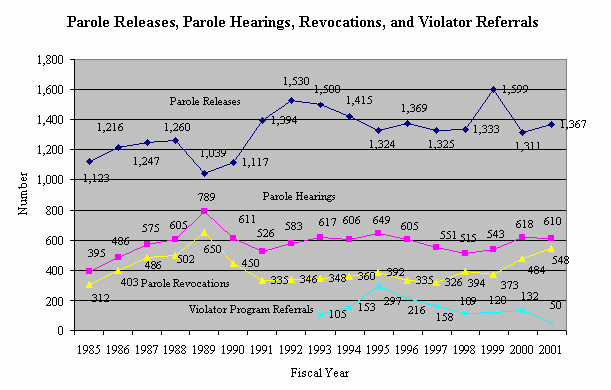
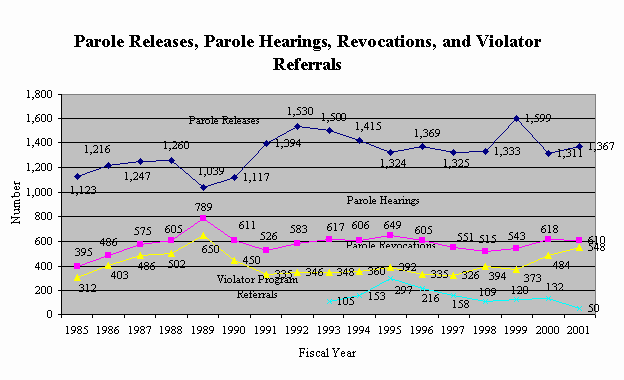
The pie chart on the following page reflects hearing
dispositions within the revocation division for FY2001. The table immediately
following shows a comparison of Administrative Parole Judge activity in FY2000
and FY2001.
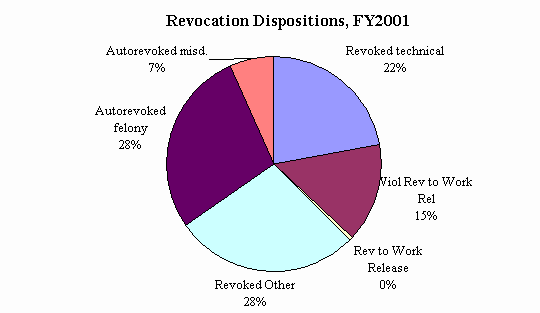
|
Table 24.
Dispositions of Parole Revocation Hearings, FY2000-2001 |
|
Disposition |
FY2000 |
FY2001 |
% Chng. |
| Cont. Disp.-Violator Prog.
ordered |
50 |
24 |
-52.0% |
| Continued Disposition |
117 |
111 |
-5.1% |
| Continued Hearing |
5 |
10 |
100.0% |
| Continue on Parole Granted |
176 |
149 |
-15.3% |
| Discharge by Admin. Law Judge |
14 |
13 |
-7.1% |
| Insufficient Evidence |
0 |
1 |
-- |
| Reinstated With New Conditions |
2 |
12 |
500.0% |
| Reinstated w/o New Conditions |
70 |
88 |
25.7% |
| Auto Rev-ret w/new aggr misd |
20 |
36 |
80.0% |
| Auto. Rev.-ret. w/new fel.conv |
115 |
156 |
35.7% |
| Rev.-WR after comp. viol prog |
11 |
2 |
-81.8% |
| Revoked |
162 |
153 |
-5.6% |
| Revoked-technicals only |
99 |
121 |
22.2% |
| Revoked/placed on WR |
72 |
80 |
11.1% |
| Violator Program/Parole |
33 |
13 |
-60.6% |
| Vol. Ret. from Viol. Program |
3 |
2 |
-33.3% |
| Voluntary termination - parole |
3 |
1 |
-66.7% |
|
Total |
952 |
972 |
2.1% |
Table 25 presents information on parole releases and
revocations during FY2001. The rates in the table are somewhat misleading, as
true revocation rates should be based upon all those on parole rather
than those paroled during a specific period. The make-up of the parole
population will be somewhat "harder core" than those released during any period
of time because the most serious offenders spend longer periods of time on
parole and are therefore "at risk" for revocation for longer periods.
In a change from last year, but consistent with the previous
two fiscal years, revocation rates for those paroled for non-forcible felonies
in FY2001 showed lower revocation rates than those paroled for forcible
offenses. With the exception of the one individual paroled on an Old Code
forcible felony, this year there is consistency in the revocation rates for
forcible felons, with only a 2.5% range from the lowest to highest rates
Among the non-forcible felony releases, the highest rates of
revocation were found for habitual criminals and Class C felons, with lower
rates for Class B and Class D releases. The low rate of the Class D felons is
somewhat surprising, given that recidivism research tends to show higher rates
of recidivism as the severity of the commitment offense drops. One possible
explanation for the low rate of revocation for the Class D felons is that they
may be on parole for shorter periods than other felons because of the maximum
five-year length of their justice system supervision.
|
Table 25.
Paroles Granted and Revoked, FY2001 |
|
Revocation Type |
|
|
|
Total |
Non-Forcible |
Forcible |
Total |
| Parole Offense |
paroles |
N |
Rate |
N |
Rate |
N |
Rate |
| Class B Non-forcible |
30 |
5 |
16.7% |
0 |
0.0% |
5 |
16.7% |
| Habitual Non-forcible |
55 |
15 |
27.3% |
1 |
1.8% |
16 |
29.1% |
| Class C Non-forcible |
697 |
183 |
26.3% |
1 |
0.1% |
184 |
26.4% |
| Class D Non-forcible |
1,677 |
280 |
16.7% |
1 |
0.1% |
281 |
16.8% |
| Other Non-forcible |
27 |
6 |
22.2% |
0 |
0.0% |
6 |
22.2% |
| Old Code non-forcible |
0 |
0 |
-- |
0 |
-- |
0 |
-- |
| Aggravated Misdemeanor |
331 |
16 |
4.8% |
0 |
0.0% |
16 |
4.8% |
| Serious Misdemeanor |
9 |
0 |
0.0% |
0 |
0.0% |
0 |
0.0% |
|
Non-Forcible Subtotal |
2,826 |
505 |
17.9% |
3 |
0.1% |
508 |
18.0% |
| Class A Forcible |
0 |
0 |
-- |
0 |
-- |
0 |
-- |
| Class B Forcible |
71 |
12 |
16.9% |
4 |
5.6% |
16 |
22.5% |
| Class C Forcible |
78 |
18 |
23.1% |
0 |
0.0% |
18 |
23.1% |
| Class D Forcible |
24 |
6 |
25.0% |
0 |
0.0% |
6 |
25.0% |
| Old Code Forcible |
1 |
0 |
0.0% |
0 |
0.0% |
0 |
0.0% |
| Forcible
Subtotal |
174 |
36 |
20.7% |
4 |
2.3% |
40 |
23.0% |
| Total |
3,000 |
541 |
18.0% |
7 |
0.2% |
548 |
18.3% |
Table 26 presents a longer-term picture of parole revocation,
containing information on total revocations and paroles since FY1989. It
illustrates the historically small number of new forcible felonies resulting in
revocation of parole. Overall, less than one percent of those paroled since
1989 have been revoked for new forcible felonies, a record of which the Board is
very proud. Revocations for all new offenses occurred in about one of every
six paroles. The highest revocation rates were found for those originally
committed for habitual non-forcible felonies (28.3 percent), Class B forcible
felonies (27.1 percent), and Class C non-forcible felonies (25.9 percent). The
lowest revocation rates for new offenses were found among misdemeanant parolees,
who admittedly served only short periods on parole.
|
Table 26.
Paroles Granted and Revoked, FY89-FY2001 |
|
|
Revocation Type |
|
|
|
|
Non-Forcible |
Forcible |
Total |
| PAROLE
OFFENSE |
Total paroles |
N |
Rate |
N |
Rate |
N |
Rate |
| Class B Non-forcible |
93 |
11 |
11.8% |
0 |
0.0% |
11 |
11.8% |
| Habitual Non-forcible |
378 |
101 |
26.7% |
6 |
1.6% |
107 |
28.3% |
| Class C Non-forcible |
7,313 |
1,852 |
25.3% |
44 |
0.6% |
1,896 |
25.9% |
| Class D Non-forcible |
14,396 |
2,388 |
16.6% |
23 |
0.2% |
2,411 |
16.7% |
| Other Non-forcible |
146 |
31 |
21.2% |
1 |
0.7% |
32 |
21.9% |
| Old Code non-forcible |
15 |
1 |
6.7% |
0 |
0.0% |
1 |
6.7% |
| Agg. Misdemeanor |
4,341 |
147 |
3.4% |
1 |
0.0% |
148 |
3.4% |
| Ser. Misdemeanor |
179 |
4 |
2.2% |
0 |
0.0% |
4 |
2.2% |
|
Non-Forcible Subtotal |
26,862 |
4,535 |
16.9% |
75 |
0.3% |
4,610 |
17.2% |
| Class A Forcible |
0 |
1 |
-- |
0 |
-- |
1 |
-- |
| Class B Forcible |
801 |
200 |
25.0% |
17 |
2.1% |
217 |
27.1% |
| Class C Forcible |
1,568 |
242 |
15.4% |
22 |
1.4% |
264 |
16.8% |
| Class D Forcible |
278 |
24 |
8.6% |
0 |
0.0% |
24 |
8.6% |
| Old Code Forcible |
46 |
5 |
10.9% |
2 |
4.3% |
7 |
15.2% |
| Forcible
Subtotal |
2,693 |
472 |
17.5% |
41 |
1.5% |
513 |
19.0% |
| Total |
29,555 |
5,007 |
16.9% |
116 |
0.4% |
5,123 |
17.3% |
Another aspect of parole revocation is the costs to the State
for county jail housing of parolees awaiting revocation hearings. While it is
not appreciated by many, this housing can constitute a considerable expenses;
if, for example, each of the 536 revocations in FY2001 were accompanied by just
ten days in jail at $50 per day, the cost to the State would be $268,000. Given
the logistical and due process considerations of parole revocation, the actual
costs to the State in FY01 was $910,784 for 1,079 inmates, or an average of
$844.10 per inmate. The average length of stay for these violators was about 17
days.
The Board made a conscious effort in FY2001 to reduce these
jail costs, particularly in Polk County, which housed the largest number of
prisoners and also had the highest daily cost of any Iowa jail. The chart below
shows a significant reduction in Polk County Jail expenditures during the last
half of FY2001, the drop resulting from a policy decision to house Polk County
violators in the Newton Correctional Facility, located in adjacent Jasper
County. Hearings of these inmates are then broadcast on the Iowa Communications
Network, thus saving transportation costs.
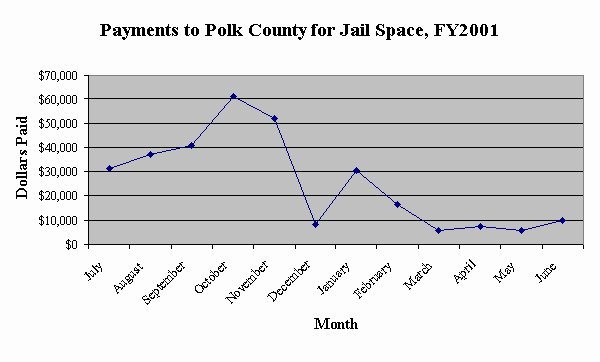
This policy change has also resulted in a reduction in total state
expenditures, as shown below. The savings accrued directly to the Department of
Corrections, which pays for such expenses.
X.
VICTIM SERVICES
The Parole Board recognizes the special place that victims
occupy as unwilling participants in some of the most violent episodes of the
criminal justice system. The Board believes that this special place entitles
victims to certain rights and privileges and that victims have special insight
into the crimes committed by individuals that the Board considers for parole and
work release. The Board believes that this insight demands that victims actively
participate in the parole process, participation that should be as painless as
possible.
To operationalize these beliefs about victims, the Parole
Board first established an active program for victim participation in 1986.
Pursuant to the program, the Board created the position of Victim Coordinator,
whose primary responsibility is to assist victims who want to exercise the
following rights established by the Victim and Witness Protection Act:
Registered victims of forcible felonies may be notified
of upcoming parole interviews.
Registered victims of forcible felonies may submit their opinions
concerning the release of the inmate either in writing or by appearing
personally at parole interviews.
Registered victims of forcible felonies are entitled to be notified
about decisions regarding the release of offenders.
Soon after implementation of this program the Board
recognized that requiring victims to testify in the presence of offenders could
be extremely stressful for victims. Finding an innovative solution, the Board
adopted the Iowa Communications Network as a vehicle to allow victims to testify
at a site near their homes while avoiding direct contact with offenders.
The Parole Board received 702 registration requests from
victims during FY2001, with 567 of these victims
meeting the statutory criteria as victims of violent crimes. At the end of the
fiscal year, 2.300 victims were registered with the Board, an increase of nearly
16 percent from the previous year. The Board also mailed 2,330 victim
notifications during the fiscal year. In reviewing the accompanying chart, note
that there was a correction in the total number of current registered victims in
FY2000; prior to that time, victims were added to the registry each year but
none were removed as perpetrators left the prison system (eliminating the
victim’s need to be on the registry). This oversight has been corrected here.
Note that, since FY96, the number of reviews conducted
annually has more than doubled and the number of notice sent has almost doubled,
all with no increase in staff.
The chart on the following page shows victim services
performed during FY2001. It is followed by an itemization of the Board’s
expenditures for FY2001.
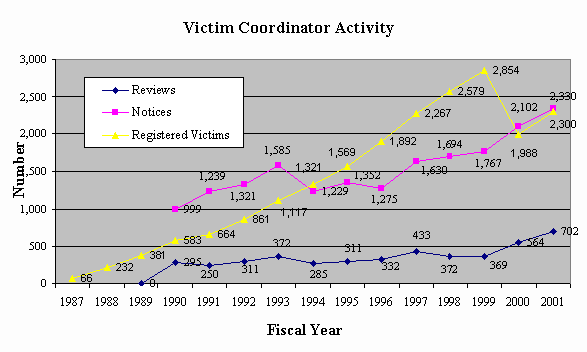
|
Table 28.
Financial Status Report FY2001 |
|
FUNDS AVAILABLE |
|
|
Balance forward |
$5,619.00 |
|
Appropriation |
$1,042,404.00 |
|
Salary adjustment |
$35,854.00 |
|
Reimbursement GASA |
$50,207.00 |
|
Workers Compensation |
$1,459.00 |
|
Carry forward to FY2002 |
-$14,640.00 |
|
Reversion |
-$43,919.00 |
|
Total funds available |
$1,076,984.00 |
|
EXPENDITURES |
|
|
Personal services |
$872,832.00 |
|
Personal travel |
$10,373.00 |
|
State vehicle operations |
$1,473.00 |
|
Out-of-state travel |
$3,095.00 |
|
Office supplies |
$11,380.00 |
|
Equipment maintenance |
$3,204.00 |
|
Communications |
$58,857.00 |
|
Contractual services |
$40,163.00 |
|
Outside services |
$766.00 |
|
Intra-state transfers |
$54,769.00 |
|
Reimbursement other agencies |
$360.00 |
|
ITS Reimbursement |
$6,891.00 |
|
Workers Compensation |
$392.00 |
|
Non-inventoried equipment |
$6,765.00 |
|
Data Processing non-inventoried |
$5,619.00 |
|
Other |
$45.00 |
|
Total expenditures |
$1,076,984.00 |
|
Ending balance |
$0.00 |
APPENDICES
Appendix 1. Average Length of Stay in Months Until Parole, by Offense Class,
FY92-FY2001 *
Appendix 2. Length of Stay in Months Until Parole For Selected Offenses
*
Appendix 3. Decisions by Offense Class and Risk, FY2000
*
Appendix 4. Decisions by Risk, FY2001 *
Appendix 5. Average Time Served in Months Prior to Parole, by Risk and
Offense Class, FY2001 *
Appendix 6. Paroles and Discharges, FY2001 Releases, by Offense and
Class *
Appendix 7. Sex Crime Paroles and Discharges *
Appendix 8. Mean and Median Time Served in Months, by Race and Offense
Class and Type, FY2001 *
Appendix 9. Mean and Median Time Served, by Race, Offense Type, and
Level, FY2001 Releases *
|
Appendix 1.
Average Length of Stay in Months Until Parole, by Offense Class, FY92-FY2001 |
| Lead
Offense Class |
FY92 |
FY93 |
FY94 |
FY95 |
FY96 |
FY97 |
FY98 |
FY99 |
FY2000 |
FY01 |
% Chng |
| Class B vs. Persons |
89.7 |
92.2 |
103.5 |
95.4 |
102.7 |
108.6 |
118.9 |
130.7 |
116.0 |
104.9 |
16.9% |
| Class B Non-Persons |
-- |
-- |
34.9 |
36.4 |
45.0 |
57.6 |
63.2 |
56.1 |
62.9 |
57.1 |
63.6% |
| Class B Total |
89.7 |
92.2 |
102.5 |
89.2 |
98.7 |
102.6 |
109.1 |
113.0 |
103.5 |
90.7 |
1.1% |
| Habitual
vs. Persons |
61.3 |
75.3 |
64.4 |
81.4 |
76.7 |
67.9 |
92.0 |
90.7 |
83.6 |
92.7 |
51.2% |
| Habitual
Non-persons |
79.8 |
77.5 |
87.1 |
100.6 |
88.8 |
111.0 |
78.3 |
72.3 |
69.3 |
55.4 |
-30.6% |
| Habitual
Total |
74.1 |
76.9 |
81.8 |
94.8 |
84.1 |
106.4 |
82.0 |
77.1 |
72.5 |
60.9 |
-17.8% |
| Class C vs. Persons |
36.9 |
42.1 |
41.7 |
46.5 |
46.0 |
47.4 |
49.1 |
55.5 |
57.9 |
49.7 |
34.7% |
| Class C Non-persons |
34.7 |
38.1 |
40.5 |
40.8 |
44.1 |
46.9 |
43.6 |
38.0 |
37.5 |
33.8 |
-2.6% |
| Class C Total |
35.1 |
38.9 |
40.8 |
41.9 |
44.5 |
47.0 |
44.8 |
41.2 |
41.8 |
36.1 |
2.8% |
| Class D vs.
Persons |
22.2 |
24.1 |
22.4 |
23.0 |
27.1 |
26.8 |
27.8 |
25.1 |
27.7 |
23.6 |
6.3% |
| Class D
Non-persons |
15.1 |
15.8 |
15.5 |
15.5 |
17.2 |
18.2 |
18.7 |
16.7 |
17.5 |
15.5 |
2.6% |
| Class D
Total |
16.0 |
16.6 |
16.1 |
16.0 |
17.9 |
18.8 |
19.2 |
17.1 |
18.0 |
15.9 |
-0.6% |
| Old Code Fel vs. Persons |
199.2 |
212.9 |
149.1 |
163.9 |
279.9 |
282.0 |
281.0 |
279.7 |
317.1 |
280.8 |
41.0% |
| Old Code Felony Total |
199.2 |
198.2 |
149.1 |
135.3 |
279.9 |
282.0 |
281.0 |
279.7 |
317.1 |
280.8 |
41.0% |
| Other
Felony non-persons |
-- |
40.6 |
39.4 |
35.6 |
42.6 |
52.3 |
54.2 |
56.8 |
46.3 |
52.4 |
29.1% |
| Felony Total Persons |
48.7 |
50.0 |
50.5 |
50.2 |
52.8 |
55.7 |
56.9 |
61.3 |
64.7 |
57.8 |
18.7% |
| Felony Total Non-persons |
24.3 |
26.1 |
25.7 |
24.9 |
26.7 |
27.5 |
26.8 |
24.3 |
25.3 |
22.3 |
-8.3% |
| Felony Total |
29.3 |
30.4 |
29.8 |
28.4 |
30.6 |
31.3 |
30.8 |
28.5 |
30.4 |
26.0 |
-11.2% |
| Agg Misdem.
vs. Persons |
11.1 |
10.7 |
10.4 |
11.1 |
11.0 |
12.5 |
10.5 |
11.8 |
11.4 |
9.5 |
-14.4% |
| Agg Misdem.
non-persons |
7.6 |
8.2 |
7.9 |
8.4 |
8.4 |
9.3 |
9.0 |
9.1 |
8.9 |
7.7 |
1.3% |
| Agg
Misdemeanor Total |
8.2 |
8.6 |
8.3 |
8.9 |
8.9 |
9.9 |
9.3 |
9.5 |
9.3 |
7.9 |
-3.7% |
| Ser Misdem. vs. Persons |
9.5 |
10.0 |
15.0 |
7.5 |
9.2 |
9.3 |
16.7 |
7.7 |
10.8 |
4.6 |
-51.6% |
| Ser Misdem. Non-persons |
12.5 |
5.7 |
9.0 |
10.8 |
8.3 |
7.6 |
9.7 |
6.4 |
6.8 |
8.3 |
-33.6% |
| Ser Misdemeanor Total |
12.1 |
7.1 |
10.3 |
9.6 |
8.6 |
8.1 |
11.2 |
6.7 |
7.4 |
7.8 |
-35.5% |
| Misdem.
Total Persons |
11.1 |
10.6 |
10.6 |
10.9 |
10.9 |
12.3 |
10.9 |
11.6 |
11.4 |
9.4 |
-14.9% |
| Misd. Total
Non-persons |
7.7 |
8.1 |
8.0 |
8.5 |
8.4 |
9.3 |
9.1 |
8.9 |
8.9 |
7.7 |
0.0% |
| Misdemeanor
Total |
8.3 |
8.5 |
8.4 |
8.9 |
8.9 |
9.8 |
9.5 |
9.4 |
9.3 |
7.9 |
-5.2% |
| All Paroles vs. Persons |
43.3 |
44.5 |
43.9 |
40.6 |
44.4 |
45.7 |
45.4 |
51.7 |
57.0 |
51.3 |
18.5% |
| All Paroles Non-persons |
21.7 |
23.3 |
22.7 |
21.7 |
23.8 |
24.5 |
24.1 |
22.2 |
23.4 |
20.7 |
-4.6% |
| All Paroles |
26.1 |
27.1 |
26.3 |
24.5 |
27.0 |
27.6 |
27.2 |
25.8 |
27.9 |
24.0 |
-8.0% |
|
Appendix 2.
Length of Stay in Months Until Parole For Selected Offenses |
|
|
|
|
|
|
|
|
|
|
|
|
|
% |
|
Offense |
FY91 |
FY92 |
FY93 |
FY94 |
FY95 |
FY96 |
FY97 |
FY98 |
FY99 |
FY2000 |
FY2001 |
Chng |
|
Robbery-1st |
93.7 |
74.6 |
97.4 |
111.5 |
89.0 |
118.0 |
117.6 |
131.2 |
135.2 |
113.4 |
105.5 |
12.6% |
|
Sexual Abuse-2nd |
85.1 |
77.8 |
88.8 |
93.3 |
89.2 |
84.4 |
88.5 |
101.0 |
130.7 |
150.7 |
96.3 |
13.2% |
|
Habitual Felony |
64.4 |
74.1 |
74.9 |
81.8 |
94.8 |
84.1 |
106.4 |
82.0 |
77.1 |
72.5 |
60.9 |
-5.4% |
|
Arson-2nd |
33.4 |
26.7 |
48.4 |
41.1 |
44.4 |
45.7 |
41.0 |
34.3 |
43.2 |
37.6 |
37.7 |
12.9% |
|
Burglary-2nd |
41.4 |
39.8 |
43.3 |
46.1 |
47.5 |
54.2 |
59.4 |
58.2 |
58.5 |
59.9 |
47.9 |
15.7% |
|
Manuf/Deliv Counterf |
13.3 |
35.4 |
20.3 |
24.7 |
30.2 |
40.6 |
50.5 |
55.7 |
60.2 |
72.3 |
|
|
|
Manuf/Deliv Cont.Subs |
|
|
|
|
16.0 |
19.8 |
24.9 |
28.0 |
28.8 |
30.5 |
28.8 |
|
|
Manuf/Deliv Narcotics |
23.0 |
28.2 |
41.7 |
53.1 |
57.2 |
62.9 |
76.7 |
90.3 |
79.8 |
80.8 |
63.7 |
177.0% |
|
Robbery-2nd |
44.5 |
33.5 |
42.1 |
45.5 |
51.2 |
48.9 |
52.9 |
53.2 |
64.3 |
67.3 |
67.9 |
52.6% |
|
Sex Abuse-3rd |
38.7 |
40.5 |
40.1 |
40.6 |
43.7 |
44.4 |
42.9 |
46.9 |
45.2 |
52.7 |
50.6 |
30.7% |
|
Theft-1st |
34.4 |
31.2 |
39.9 |
41.9 |
40.7 |
40.8 |
46.2 |
45.2 |
36.3 |
40.0 |
38.5 |
11.9% |
|
Willful Injury |
34.0 |
32.6 |
45.8 |
37.5 |
39.9 |
48.8 |
46.1 |
56.5 |
60.7 |
49.2 |
47.2 |
38.8% |
|
Att Burglary-2nd |
16.6 |
21.1 |
19.8 |
25.9 |
29.9 |
27.3 |
46.6 |
43.7 |
28.6 |
17.4 |
14.1 |
-15.1% |
|
Burglary-3rd |
|
|
6.5 |
13.0 |
18.4 |
20.4 |
23.7 |
25.3 |
22.8 |
27.0 |
20.8 |
|
|
Crim Mischief-2nd |
18.5 |
21.7 |
19.8 |
17.4 |
23.8 |
24.8 |
38.0 |
22.6 |
20.9 |
20.7 |
24.0 |
29.7% |
|
Forgery |
17.6 |
22.1 |
20.6 |
23.0 |
22.0 |
20.9 |
24.3 |
21.7 |
21.3 |
23.5 |
21.7 |
23.3% |
|
Going Armed w/intent |
19.7 |
20.2 |
21.4 |
23.3 |
23.5 |
25.5 |
19.2 |
28.0 |
23.5 |
28.8 |
26.4 |
34.0% |
|
Lascivious Acts |
24.0 |
28.7 |
25.2 |
23.5 |
25.6 |
29.4 |
29.0 |
28.7 |
49.6 |
37.6 |
33.1 |
37.9% |
|
Manuf/deliv Marijuana |
12.3 |
11.4 |
11.0 |
15.1 |
19.8 |
25.4 |
24.2 |
31.5 |
29.8 |
21.4 |
|
|
|
Manuf/deliv Marij<50 k |
|
|
|
4.9 |
10.2 |
12.9 |
15.7 |
17.3 |
16.9 |
21.1 |
15.4 |
|
|
Manu./Deliv Non-Narc. |
16.2 |
19.3 |
23.8 |
38.5 |
35.2 |
36.3 |
|
|
|
|
|
|
|
OMVUI/OWI-3rd |
11.1 |
11.3 |
12.2 |
11.4 |
10.9 |
12.3 |
12.0 |
12.4 |
10.0 |
11.7 |
11.1 |
0.0% |
|
D-Trnsprt Firearm/Fel |
|
10.8 |
14.9 |
21.7 |
21.3 |
21.9 |
23.4 |
23.0 |
21.0 |
22.4 |
20.1 |
|
|
Theft-2nd |
18.1 |
17.5 |
20.6 |
21.0 |
21.1 |
21.9 |
22.6 |
24.2 |
22.2 |
21.6 |
20.7 |
14.4% |
|
Assault with a weapon |
8.5 |
9.0 |
8.9 |
10.4 |
10.3 |
11.1 |
13.3 |
11.9 |
13.5 |
14.2 |
7.5 |
-11.8% |
|
Asslt w/int com ser inj |
8.0 |
11.0 |
8.4 |
9.2 |
11.1 |
11.2 |
13.8 |
10.9 |
9.6 |
11.0 |
8.0 |
0.0% |
|
Att Burglary-3rd |
|
|
|
|
|
|
|
|
11.5 |
11.7 |
8.7 |
|
|
Driving while barred |
6.2 |
8.2 |
7.5 |
10.8 |
9.2 |
8.9 |
9.1 |
8.6 |
9.2 |
8.9 |
8.9 |
43.5% |
|
OMVUI/OWI-2nd |
6.9 |
6.7 |
6.6 |
6.2 |
6.7 |
6.4 |
6.7 |
6.4 |
6.5 |
7.5 |
5.8 |
-15.9% |
|
OMVWOOC |
9.7 |
9.3 |
9.3 |
9.7 |
12.9 |
11.4 |
10.1 |
11.6 |
11.7 |
9.9 |
8.3 |
-14.4% |
|
Prostitution |
8.0 |
8.3 |
9.8 |
8.7 |
9.9 |
10.1 |
10.6 |
10.1 |
12.5 |
9.4 |
7.6 |
-5.0% |
|
Theft-Third |
9.0 |
7.6 |
9.5 |
8.4 |
10.7 |
10.1 |
12.7 |
11.2 |
11.8 |
10.0 |
9.4 |
4.4% |
|
Source: Annual Reports of the Board of Parole |
|
|
|
|
|
|
|
|
|
|
Appendix 3.
Decisions by Offense Class and Risk, FY2000 |
|
Parole Release |
Work Release |
Release Denied |
Total |
|
| Offense
Class |
Average Risk |
Average Risk |
Average Risk |
Average Risk |
Total N |
| B Felony vs. person |
5.61 |
6.10 |
6.30 |
6.23 |
966 |
| B Felony not person |
5.03 |
5.83 |
5.07 |
5.18 |
152 |
| B Felony Total |
5.44 |
6.04 |
6.17 |
6.09 |
1,118 |
| Other Felony drug |
4.96 |
6.67 |
6.38 |
5.98 |
87 |
| Habitual vs. person |
8.25 |
9.00 |
8.55 |
8.51 |
41 |
| Habitual not person |
6.83 |
7.00 |
7.47 |
7.27 |
244 |
| Habitual Total |
7.04 |
7.10 |
7.64 |
7.45 |
285 |
| C Felony vs. person |
4.76 |
7.32 |
5.83 |
5.67 |
1,082 |
| C Felony not person |
4.73 |
5.71 |
6.17 |
5.64 |
2,121 |
| C Felony Total |
4.73 |
5.59 |
6.01 |
5.63 |
3,155 |
| D Felony vs. person |
4.65 |
6.45 |
5.86 |
5.74 |
600 |
| D Felony not person |
3.20 |
5.74 |
6.00 |
4.77 |
3,766 |
| D Felony Total |
3.28 |
5.83 |
2.98 |
4.92 |
4,414 |
| Old Code Total |
9.00 |
9.00 |
8.75 |
8.80 |
10 |
| Compact Felony Total |
-- |
-- |
4.71 |
4.71 |
7 |
| Total
Felonies vs. person |
5.06 |
5.87 |
6.06 |
5.94 |
2,699 |
| Total
Felonies not person |
3.74 |
5.79 |
6.11 |
5.18 |
6,370 |
| Total
Felonies |
3.88 |
5.81 |
6.09 |
5.41 |
9,076 |
| Agg. Misd. vs. person |
4.93 |
6.36 |
6.09 |
5.96 |
340 |
| Agg. Misd. not person |
3.52 |
5.98 |
5.53 |
4.73 |
687 |
| Agg. Misd. Total |
3.70 |
6.08 |
5.78 |
5.14 |
1,027 |
| Serious Misd. vs. person |
6.00 |
8.00 |
6.29 |
6.35 |
23 |
| Ser. Misd. not person |
5.75 |
7.60 |
7.29 |
6.97 |
34 |
| Serious Misd. Total |
5.78 |
7.67 |
6.79 |
6.72 |
57 |
| Total Misd.
vs. person |
4.95 |
6.43 |
6.10 |
5.99 |
363 |
| Total Misd.
not person |
3.58 |
6.11 |
5.63 |
4.83 |
721 |
| Total
Misdemeanors |
3.76 |
6.19 |
5.85 |
5.22 |
1,084 |
| All Crimes vs. person |
5.04 |
5.92 |
6.06 |
5.94 |
3,062 |
| All Crimes not person |
3.73 |
5.81 |
6.06 |
5.15 |
7,091 |
| Total All
Crimes |
3.87 |
5.84 |
6.06 |
5.39 |
|
| Total N |
3,000 |
1,249 |
5,911 |
10,160 |
|
|
Appendix 4.
Decisions by Risk, FY2001 |
|
Decision |
|
|
|
Parole |
Work Release |
Denied |
Total |
| Risk Score |
N |
% |
N |
% |
N |
% |
N |
% |
|
Missing |
611 |
87.7% |
5 |
0.7% |
81 |
11.6% |
697 |
6.9% |
|
1 |
9 |
81.8% |
|
0.0% |
2 |
18.2% |
11 |
0.1% |
|
2 |
737 |
35.2% |
243 |
11.6% |
1,111 |
53.1% |
2,091 |
20.6% |
|
3 |
71 |
15.8% |
41 |
9.2% |
336 |
75.0% |
448 |
4.4% |
|
4 |
217 |
45.5% |
66 |
13.8% |
194 |
40.7% |
477 |
4.7% |
|
5 |
416 |
38.7% |
173 |
16.1% |
486 |
45.2% |
1,075 |
10.6% |
|
6 |
342 |
25.8% |
186 |
14.0% |
798 |
60.2% |
1,326 |
13.1% |
|
7 |
120 |
24.7% |
98 |
20.2% |
267 |
55.1% |
485 |
4.8% |
|
8 |
226 |
16.2% |
184 |
13.2% |
985 |
70.6% |
1,395 |
13.7% |
|
9 |
251 |
11.6% |
253 |
11.7% |
1,651 |
76.6% |
2,155 |
21.2% |
|
Total |
3,000 |
29.5% |
1,249 |
12.3% |
5,911 |
58.2% |
10,160 |
100.0% |
|
Appendix 5.
Average Time Served in Months Prior to Parole, by Risk and Offense Class,
FY2001 |
|
Crime Class |
|
|
Risk Level |
Class B-50 year |
Class B |
Habitual |
Class C |
Class D |
Other Fel |
Agg.
Misd. |
Ser.
Misd. |
Total |
Total N |
|
Unscored |
|
|
|
41.5 |
7.2 |
|
5.2 |
|
7.2 |
611 |
|
Risk Level 1 |
|
|
|
24.9 |
10.8 |
|
15.3 |
|
18.0 |
9 |
|
Risk Level 2 |
121.3 |
73.1 |
45.9 |
28.0 |
16.6 |
47.4 |
6.8 |
8.1 |
22.0 |
737 |
|
Risk Level 3 |
62.3 |
104.9 |
|
38.7 |
23.0 |
52.7 |
7.0 |
|
37.5 |
71 |
|
Risk Level 4 |
|
29.0 |
|
33.4 |
16.6 |
46.4 |
7.2 |
6.1 |
21.0 |
217 |
|
Risk Level 5 |
|
49.1 |
47.0 |
31.9 |
20.4 |
54.5 |
7.0 |
|
24.8 |
416 |
|
Risk Level 6 |
172.2 |
84.9 |
56.4 |
37.2 |
20.1 |
52.3 |
8.2 |
5.1 |
29.2 |
342 |
|
Risk Level 7 |
|
|
50.7 |
49.4 |
26.4 |
61.4 |
11.4 |
|
33.5 |
120 |
|
Risk Level 8 |
|
110.6 |
58.9 |
55.2 |
23.2 |
50.6 |
11.1 |
8.7 |
38.5 |
226 |
|
Risk Level 9 |
185.3 |
106.4 |
87.9 |
49.6 |
25.1 |
43.4 |
17.0 |
12.2 |
43.7 |
251 |
|
Total |
132.5 |
88.5 |
60.9 |
36.1 |
15.9 |
52.4 |
7.9 |
7.8 |
24.0 |
3,000 |
|
Total N |
5 |
96 |
55 |
775 |
1,701 |
27 |
331 |
9 |
3,000 |
|
Appendix 6.
Paroles and Discharges, FY2001 Releases, by Offense and Class |
|
|
Total |
Discharge |
Parole |
Par frm WR |
Total Parole |
|
Class |
Lead Offense |
N |
N |
% |
N |
N |
N |
% |
|
712.2 1978 |
Arson-1st |
3 |
1 |
33.3% |
|
2 |
2 |
66.7% |
|
707.11 1983 |
Attempted Murder |
5 |
|
0.0% |
3 |
2 |
5 |
100.0% |
|
713.3 1983 |
Burglary-1st |
10 |
1 |
10.0% |
2 |
7 |
9 |
90.0% |
|
710.3 1978 |
Kidnapping-2nd |
4 |
2 |
50.0% |
1 |
1 |
2 |
50.0% |
|
707.3 1983 |
Murder-2nd |
4 |
|
0.0% |
2 |
2 |
4 |
100.0% |
|
707.3 1978 |
Murder-2nd |
1 |
1 |
100.0% |
|
|
0 |
0.0% |
|
711.2 1978 |
Robbery-1st |
36 |
8 |
22.2% |
9 |
19 |
28 |
77.8% |
|
709.3 1978 |
Sexual Abuse-2nd |
20 |
12 |
60.0% |
3 |
5 |
8 |
40.0% |
|
709.3 1996 |
Sexual Abuse-2nd
85% |
1 |
1 |
100.0% |
|
|
0 |
0.0% |
|
B Felony vs. persons |
84 |
26 |
31.0% |
20 |
38 |
58 |
69.0% |
|
124.406(1A 1994 |
Distr. Cont.
Subs. to <age 18 |
3 |
|
0.0% |
1 |
2 |
3 |
100.0% |
|
204.401(1B) 1989 |
Proh.Acts/Contr.,CF,Sim.Subst. |
3 |
|
0.0% |
|
3 |
3 |
100.0% |
|
124.401(1B) 1993 |
Proh.Acts/Contr.,CF,Sim.Subst |
20 |
|
0.0% |
13 |
7 |
20 |
100.0% |
|
B Felony drugs |
26 |
0 |
0.0% |
14 |
12 |
26 |
100.0% |
|
Total B Felonies |
110 |
26 |
23.6% |
34 |
50 |
84 |
76.4% |
|
698.1 0001 |
Rape |
1 |
|
0.0% |
1 |
|
1 |
100.0% |
|
711.2 0001 |
Robbery
w/Aggravation |
1 |
|
0.0% |
|
1 |
1 |
100.0% |
|
Total Old Code |
2 |
0 |
0.0% |
1 |
1 |
2 |
100.0% |
|
124.411 1993 |
Contr. Subst. 2nd
or Subseq. |
12 |
|
0.0% |
7 |
5 |
12 |
100.0% |
|
124.401(1E) 1993 |
Contr.
Subst.Viol./Firearm |
4 |
|
0.0% |
2 |
2 |
4 |
100.0% |
|
204.411 1978 |
Contr..Subst,2nd
or Subs. Off. |
5 |
2 |
40.0% |
1 |
2 |
3 |
60.0% |
|
124.401A 1993 |
Distr. C.S.
School/Park |
3 |
|
0.0% |
2 |
1 |
3 |
100.0% |
|
124.401A 1994 |
Distr. C.S. on
Real Prop. |
3 |
|
0.0% |
3 |
|
3 |
100.0% |
|
204.401A 1991 |
Distr.Contr.
Subst.-School/Park |
1 |
1 |
100.0% |
|
|
0 |
0.0% |
|
204.401(1A) 1989 |
Proh.Acts/Contr.
CF,Sim.Subst. |
1 |
|
0.0% |
|
1 |
1 |
100.0% |
|
Total Other Felony-drugs |
29 |
3 |
10.3% |
15 |
11 |
26 |
89.7% |
|
902.8,A 1978 |
Habitual
Offender-Person |
8 |
1 |
12.5% |
2 |
5 |
7 |
87.5% |
|
902.8,B 1978 |
Habitual
Offender-Property |
51 |
5 |
9.8% |
20 |
26 |
46 |
90.2% |
|
Total Habitual |
59 |
6 |
10.2% |
22 |
31 |
53 |
89.8% |
|
Total Other Felony |
88 |
9 |
10.2% |
37 |
42 |
79 |
89.8% |
|
|
Total |
Discharge |
Parole |
Par frm WR |
Total Parole |
|
Class |
Lead Offense |
N |
N |
% |
N |
N |
N |
% |
|
712.3 1978 |
Arson-2nd |
17 |
6 |
35.3% |
5 |
6 |
11 |
64.7% |
|
713.5 1983 |
Burglary-2nd |
104 |
25 |
24.0% |
36 |
43 |
79 |
76.0% |
|
716.3 1978 |
Criminal Mischief
1st |
1 |
1 |
100.0% |
|
|
0 |
0.0% |
|
714.9 1978 |
Fraudulent
Practices-1st |
3 |
|
0.0% |
1 |
2 |
3 |
100.0% |
|
204.401(1A) 1978 |
Mfg./Del. Narc.
Contr.Subst. |
1 |
1 |
100.0% |
|
|
0 |
0.0% |
|
712.6 1978 |
Poss.
Explosv/Incendiary Matl. |
1 |
|
0.0% |
|
1 |
1 |
100.0% |
|
155A.24(2) 1989 |
Prescription Drug
Violation |
1 |
|
0.0% |
1 |
|
1 |
100.0% |
|
204.401(1C) 1989 |
Proh.Acts/Contr.,CF,Sim.Subst. |
16 |
6 |
37.5% |
7 |
3 |
10 |
62.5% |
|
124.401(1C) 1993 |
Proh.Acts/Contr.,CF,Sim.Subst |
413 |
26 |
6.3% |
248 |
139 |
387 |
93.7% |
|
124B.9(2) 1997 |
Recv. Precursor
Subs./Mfg C.S. |
1 |
|
0.0% |
|
1 |
1 |
100.0% |
|
714.2(1) 1978 |
Theft-1st |
114 |
16 |
14.0% |
56 |
42 |
98 |
86.0% |
|
Total C Felonies not persons |
672 |
81 |
12.1% |
354 |
237 |
591 |
87.9% |
|
726.3 1978 |
Abandon/Neglect/Dep. Pers. |
5 |
1 |
20.0% |
|
4 |
4 |
80.0% |
|
726.6(2) 1985 |
Child
Endanger-Serious Inj. |
9 |
1 |
11.1% |
2 |
6 |
8 |
88.9% |
|
706.3,A 1978 |
Conspiracy-Forcible Felony |
7 |
2 |
28.6% |
2 |
3 |
5 |
71.4% |
|
710.4 1978 |
Kidnapping-3rd |
7 |
2 |
28.6% |
4 |
1 |
5 |
71.4% |
|
724.30(1) 1994 |
Rcklss Use of
Firearm-Ser. Inj. |
1 |
|
0.0% |
|
1 |
1 |
100.0% |
|
711.3 1978 |
Robbery-2nd |
39 |
24 |
61.5% |
9 |
6 |
15 |
38.5% |
|
709.4 1978 |
Sexual Abuse-3rd |
67 |
54 |
80.6% |
7 |
6 |
13 |
19.4% |
|
709.4(2C,4) 1993 |
Sexual Abuse-3rd
Not Forcible |
8 |
4 |
50.0% |
2 |
2 |
4 |
50.0% |
|
728.12(1) 1983 |
Sexual
Exploitation of Minor |
1 |
1 |
100.0% |
|
|
0 |
0.0% |
|
708.6,A 1993 |
Terror. w/Int. to
Inj., Provoke |
10 |
3 |
30.0% |
3 |
4 |
7 |
70.0% |
|
707.6A(1) 1990 |
Veh.
Hom./U-Inf.or Reckless |
8 |
1 |
12.5% |
3 |
4 |
7 |
87.5% |
|
707.4 1978 |
Voluntary
Manslaughter |
2 |
1 |
50.0% |
|
1 |
1 |
50.0% |
|
708.4 1978 |
Willful Injury |
31 |
9 |
29.0% |
10 |
12 |
22 |
71.0% |
|
Total C Felonies vs. persons |
195 |
103 |
52.8% |
42 |
50 |
92 |
47.2% |
|
Total C Felonies |
867 |
184 |
21.2% |
396 |
287 |
683 |
78.8% |
|
703.1,B 1991 |
Aiding and
Abetting |
1 |
|
0.0% |
|
1 |
1 |
100.0% |
|
713.6 1983 |
Att. Burglary-2nd |
9 |
4 |
44.4% |
4 |
1 |
5 |
55.6% |
|
713.6A 1992 |
Burglary-3rd |
311 |
101 |
32.5% |
141 |
69 |
210 |
67.5% |
|
706.3,C 1978 |
Conspiracy to
Commit Felony |
10 |
3 |
30.0% |
2 |
5 |
7 |
70.0% |
|
716.4 1978 |
Criminal Mischief
2nd |
20 |
7 |
35.0% |
12 |
1 |
13 |
65.0% |
|
235B.20(5) 1997 |
Dependent Adult
Abuse >$100 |
1 |
1 |
100.0% |
|
|
0 |
0.0% |
|
321.279(3) 1999 |
Eluding >25 MPH
Enhanced |
1 |
|
0.0% |
1 |
|
1 |
100.0% |
|
719.4(1) 1978 |
Escape of Felon |
4 |
2 |
50.0% |
2 |
|
2 |
50.0% |
|
453B.12 1993 |
Fail Obtain C.S.
Tax Stamp |
28 |
3 |
10.7% |
21 |
4 |
25 |
89.3% |
|
811.2(8),A 1978 |
Fail to
Appear-Felony Charge |
12 |
6 |
50.0% |
6 |
|
6 |
50.0% |
|
692A.7(1,B) 1995 |
Fail to Reg.-Sex
Offender-2nd |
2 |
1 |
50.0% |
1 |
|
1 |
50.0% |
|
099E.18(4) 1994 |
Falsify Lottery
Ticket |
1 |
|
0.0% |
|
1 |
1 |
100.0% |
|
715A.2(A) 1987 |
Forgery |
209 |
57 |
27.3% |
106 |
46 |
152 |
72.7% |
|
|
Total |
Discharge |
Parole |
Par frm WR |
Total Parole |
|
Class |
Lead Offense |
N |
N |
% |
N |
N |
N |
% |
|
714.10 1978 |
Fraudulent
Practices-2nd |
11 |
2 |
18.2% |
6 |
3 |
9 |
81.8% |
|
719.8 1978 |
Furn. Cont. Subs.
to Inmates |
2 |
1 |
50.0% |
1 |
|
1 |
50.0% |
|
124.407,A 1993 |
Gatherings-Cont.
Subs. Used |
4 |
|
0.0% |
3 |
1 |
4 |
100.0% |
|
321J.2(C) 1986 |
OWI-3rd |
816 |
77 |
9.4% |
684 |
55 |
739 |
90.6% |
|
725.2 1978 |
Pimping |
1 |
|
0.0% |
1 |
|
1 |
100.0% |
|
124.401(5),C1998 |
Poss. C.S. w/o
RX.>2nd Off. |
10 |
|
0.0% |
7 |
3 |
10 |
100.0% |
|
124.401(4) 1997 |
Poss. Prod. As
Intermed. C.S. |
32 |
2 |
6.3% |
21 |
9 |
30 |
93.8% |
|
147.103A(1) 1993 |
Practice Medicine
w/o License |
1 |
|
0.0% |
1 |
|
1 |
100.0% |
|
124.401(1D)B1993 |
Proh.Acts/Marijuana, <50 Kilo |
86 |
12 |
14.0% |
58 |
16 |
74 |
86.0% |
|
724.26 1990 |
Rec., Transp
Firearm/Felon |
47 |
16 |
34.0% |
18 |
13 |
31 |
66.0% |
|
705.1,B 1978 |
Solicit to Commit
Felony |
3 |
1 |
33.3% |
2 |
|
2 |
66.7% |
|
714.2(2) 1978 |
Theft-2nd |
179 |
50 |
27.9% |
103 |
26 |
129 |
72.1% |
|
724.16A,1 1995 |
Traffic in Stolen
Firearms-1st |
1 |
|
0.0% |
1 |
|
1 |
100.0% |
|
724.3 1978 |
Unauth. Poss.
Offensive Weap. |
4 |
2 |
50.0% |
|
2 |
2 |
50.0% |
|
715A.6(A) 1987 |
Unauthorized Use
Credit Cards |
1 |
|
0.0% |
1 |
|
1 |
100.0% |
|
Total D Felonies not person |
1,807 |
348 |
19.3% |
1,203 |
256 |
1,459 |
80.7% |
|
08.2A(4) 1996 |
Assault-Serious
Injury |
16 |
8 |
50.0% |
5 |
3 |
8 |
50.0% |
|
708.3A(1) 1995 |
Assault Peace
Officer w/Intent |
4 |
2 |
50.0% |
2 |
|
2 |
50.0% |
|
708.3A(2) 1995 |
Assault Peace
Officer/Weapon |
2 |
1 |
50.0% |
1 |
|
1 |
50.0% |
|
708.3,B 1978 |
Assault While
Partic. In Felony |
14 |
7 |
50.0% |
6 |
1 |
7 |
50.0% |
|
709.11,B 1983 |
Assault to Sex
Abuse/Injury |
12 |
11 |
91.7% |
1 |
|
1 |
8.3% |
|
710.10(1) 1987 |
Enticing Away a
Child |
2 |
2 |
100.0% |
|
|
0 |
0.0% |
|
711.4 1978 |
Extortion |
13 |
6 |
46.2% |
4 |
3 |
7 |
53.8% |
|
708.8 1978 |
Going Armed with
Intent |
28 |
10 |
35.7% |
11 |
7 |
18 |
64.3% |
|
726.2 1978 |
Incest |
3 |
3 |
100.0% |
|
|
0 |
0.0% |
|
719.1(1),C 1995 |
Interf. w/Off.
Acts-Weapon |
4 |
2 |
50.0% |
1 |
1 |
2 |
50.0% |
|
707.5(1) 1978 |
Invol.
Mansl./Public Offense |
3 |
3 |
100.0% |
|
|
0 |
0.0% |
|
709.8 1978 |
Lascivious Acts
with Child |
51 |
43 |
84.3% |
7 |
1 |
8 |
15.7% |
|
724.30(2) 1994 |
Reckless
Use/Firearm-Injury |
1 |
|
0.0% |
1 |
|
1 |
100.0% |
|
707.6A(4) 1997 |
Ser. Inj. By
Motor Vehicle |
6 |
|
0.0% |
3 |
3 |
6 |
100.0% |
|
705.1,A 1978 |
Solicit to Commit
Felony |
1 |
1 |
100.0% |
|
|
0 |
0.0% |
|
708.11(2A) 1992 |
Stalking, 3rd of
Subseq. Offns |
1 |
|
0.0% |
|
1 |
1 |
100.0% |
|
708.11(3B) 1994 |
Stalking/Weap/<18/2nd |
9 |
6 |
66.7% |
3 |
|
3 |
33.3% |
|
708.6,B 1993 |
Terrorism |
4 |
1 |
25.0% |
1 |
2 |
3 |
75.0% |
|
712.8 1978 |
Threats-Destructive Subs. |
1 |
|
0.0% |
1 |
|
1 |
100.0% |
|
708.4(2) 1999 |
Willful Injury
w/Bodily Injury |
4 |
|
0.0% |
4 |
|
4 |
100.0% |
|
Total D Felonies vs. persons |
179 |
106 |
59.2% |
51 |
22 |
73 |
40.8% |
|
Total D Felonies |
1,986 |
454 |
22.9% |
1,254 |
278 |
1,532 |
77.1% |
|
COMPACT |
Compact |
3 |
2 |
66.7% |
1 |
|
1 |
33.3% |
|
|
Total |
Discharge |
Parole |
Par frm WR |
Total Parole |
|
Class |
Lead Offense |
N |
N |
% |
N |
N |
N |
% |
|
703.3,A 1978 |
Access. After the
Fact-Felony |
4 |
4 |
100.0% |
|
|
0 |
0.0% |
|
123.91(2) 1993 |
Alch. Chapt 123
3rd Conv. |
16 |
2 |
12.5% |
13 |
1 |
14 |
87.5% |
|
123.91(3B) 1983 |
Alch. Chapt 123
Habitual |
2 |
2 |
100.0% |
|
|
0 |
0.0% |
|
713.6B 1992 |
Attempted
Burglary-3rd |
24 |
12 |
50.0% |
11 |
1 |
12 |
50.0% |
|
724.4 1978 |
Carrying Weapons |
12 |
8 |
66.7% |
4 |
|
4 |
33.3% |
|
716.5 1978 |
Criminal Mischief
3rd |
15 |
6 |
40.0% |
9 |
|
9 |
60.0% |
|
321.561 1978 |
Driving While
Barred |
57 |
18 |
31.6% |
33 |
6 |
39 |
68.4% |
|
321.279(2) 1999 |
Eluding/Att.
Elude>25 MPH |
2 |
1 |
50.0% |
1 |
|
1 |
50.0% |
|
692A.7(1,A) 1995 |
Fail to
Register-Sex Offender |
10 |
10 |
100.0% |
|
|
0 |
0.0% |
|
715A.2(B) 1987 |
Forgery |
8 |
1 |
12.5% |
7 |
|
7 |
87.5% |
|
715A.8,B 1999 |
Identity Theft
w/Int. <$1000 |
1 |
1 |
100.0% |
|
|
0 |
0.0% |
|
321.261(3) 1978 |
Leave Scene of
Death Accident |
1 |
1 |
100.0% |
|
|
0 |
0.0% |
|
714.7 1978 |
Operate Veh. w/o
Consent |
43 |
25 |
58.1% |
18 |
|
18 |
41.9% |
|
321J.2(B) 1986 |
OWI-2nd |
119 |
27 |
22.7% |
91 |
1 |
92 |
77.3% |
|
124.401(5),B1998 |
Poss. C.S. w/o
RX-2nd Off. |
11 |
4 |
36.4% |
5 |
2 |
7 |
63.6% |
|
124.401(5),F1998 |
Possession
Marijuana>2nd Off. |
7 |
5 |
71.4% |
2 |
|
2 |
28.6% |
|
155A.24,2B 1993 |
RX Drug
Violation-2nd Off. |
1 |
|
0.0% |
1 |
|
1 |
100.0% |
|
719.3 1978 |
Prev. Apprehen.,
Obstr. Prosc. |
1 |
|
0.0% |
1 |
|
1 |
100.0% |
|
124.402(1),E1997 |
Proh.
Acts/Premises Violation |
5 |
1 |
20.0% |
3 |
1 |
4 |
80.0% |
|
725.1 1978 |
Prostitution |
13 |
7 |
53.8% |
5 |
1 |
6 |
46.2% |
|
715A.5 1987 |
Tampering with
Records |
2 |
2 |
100.0% |
|
|
0 |
0.0% |
|
714.2(3) 1978 |
Theft-3rd |
82 |
30 |
36.6% |
45 |
7 |
52 |
63.4% |
|
715A.6(B) 1987 |
Unauthorized Use
Credit Cards |
4 |
1 |
25.0% |
3 |
|
3 |
75.0% |
|
Total Agg. Misd. not persons |
440 |
168 |
38.2% |
252 |
20 |
272 |
61.8% |
|
708.2(1) 1978 |
Assault to
Inflict Serious Injury |
26 |
14 |
53.8% |
9 |
3 |
12 |
46.2% |
|
708.2(3) 1989 |
Assault-Weapon |
19 |
15 |
78.9% |
3 |
1 |
4 |
21.1% |
|
708.3A(3) 1995 |
Asslt Peace
Officer, Weapon |
7 |
6 |
85.7% |
1 |
|
1 |
14.3% |
|
709.11,C 1983 |
Asslt to Sex
Abuse/No Injury |
14 |
14 |
100.0% |
|
|
0 |
0.0% |
|
710.10(2) 1987 |
Attempt to Entice
Child |
1 |
1 |
100.0% |
|
|
0 |
0.0% |
|
726.6(3) 1985 |
Child
Endangerment-No Injury |
10 |
7 |
70.0% |
3 |
|
3 |
30.0% |
|
708.2A(3B) 1996 |
Dom.Abuse Asslt,
2nd SI/SE |
55 |
46 |
83.6% |
9 |
|
9 |
16.4% |
|
708.2A(2C) 1991 |
Dom.Abuse Asslt,
Int.or Weap |
16 |
10 |
62.5% |
3 |
3 |
6 |
37.5% |
|
708.2A(3B) 1991 |
Dom.Ab. Asslt,
Subseq.SI/SE |
5 |
4 |
80.0% |
1 |
|
1 |
20.0% |
|
708.7(2) 1989 |
Harassment-1st
Degree |
13 |
12 |
92.3% |
1 |
|
1 |
7.7% |
|
710.8 1985 |
Harboring a
Runaway |
1 |
1 |
100.0% |
|
|
0 |
0.0% |
|
709.12 1983 |
Indecent Contact
w/Child |
8 |
8 |
100.0% |
|
|
0 |
0.0% |
|
719.1(1),C 1993 |
Interf. w/Off.
Acts/Inj./Weap |
2 |
2 |
100.0% |
|
|
0 |
0.0% |
|
719.1(1),B 1995 |
Interf.
w/Official Acts-Injury |
3 |
1 |
33.3% |
2 |
|
2 |
66.7% |
|
707.5(2) 1978 |
Invol. Mansl./Act
Likely Cause |
2 |
2 |
100.0% |
|
|
0 |
0.0% |
|
723.1 1978 |
Riot |
3 |
2 |
66.7% |
1 |
|
1 |
33.3% |
|
|
Total |
Discharge |
Parole |
Par frm WR |
Total Parole |
|
Class |
Lead Offense |
N |
N |
% |
N |
N |
N |
% |
|
720.4 1978 |
Tamper w/Witness
or Juror |
3 |
2 |
66.7% |
1 |
|
1 |
33.3% |
|
Total Agg. Misd vs. persons |
188 |
147 |
78.2% |
34 |
7 |
41 |
21.8% |
|
Total Aggrav. Misdemeanors |
628 |
315 |
50.2% |
286 |
27 |
313 |
49.8% |
|
123.91(1) 1993 |
Alcohol Chapt 123
2nd Conv. |
1 |
|
0.0% |
1 |
|
1 |
100.0% |
|
665.4(2) 1978 |
Contempt-District
Court |
1 |
1 |
100.0% |
|
|
0 |
0.0% |
|
716.6,A 1985 |
Criminal Mischief
4th |
2 |
2 |
100.0% |
|
|
0 |
0.0% |
|
321.218(2) 1992 |
Driving-License
Revoked |
1 |
1 |
100.0% |
|
|
0 |
0.0% |
|
719.4(2) 1978 |
Escape of
Misdemeanant |
1 |
1 |
100.0% |
|
|
0 |
0.0% |
|
719.1(1),A 1995 |
Interference
w/Official Acts |
2 |
1 |
50.0% |
1 |
|
1 |
50.0% |
|
204.401(1C) 1978 |
Mfg./Del. Schd.
IV Cont.Subst. |
1 |
1 |
100.0% |
|
|
0 |
0.0% |
|
321J.2(A) 1986 |
OWI-1st |
2 |
1 |
50.0% |
1 |
|
1 |
50.0% |
|
124.401(5),A1997 |
Possession. C.S.
w/o Prescript. |
1 |
1 |
100.0% |
|
|
0 |
0.0% |
|
124.401(5),B1997 |
Possession.
Marijuana |
3 |
2 |
66.7% |
1 |
|
1 |
33.3% |
|
124.401(5),E1998 |
Possession
Marijuana-2nd Off. |
1 |
1 |
100.0% |
|
|
0 |
0.0% |
|
719.4(3) 1978 |
Voluntary Absence
(escape) |
3 |
3 |
100.0% |
|
|
0 |
0.0% |
|
Total Ser. Misd not persons |
19 |
15 |
78.9% |
4 |
0 |
4 |
21.1% |
|
708.2(2) 1978 |
Assault
w/injury-No Intent |
3 |
3 |
100.0% |
|
|
0 |
0.0% |
|
708.2(2) 1998 |
Assault/Bodily
Inj./Mental Ill. |
3 |
3 |
100.0% |
|
|
0 |
0.0% |
|
708.2A(2B) 1995 |
Dom. Abuse
Asslt-Inj/Mental |
4 |
4 |
100.0% |
|
|
0 |
0.0% |
|
708.2A(2B) 1991 |
Dom.Abuse
Asslt-Inj/No Intent |
2 |
2 |
100.0% |
|
|
0 |
0.0% |
|
708.2A 1989 |
Dom.Ab Si Asslt,
Prior=2 yrs |
1 |
1 |
100.0% |
|
|
0 |
0.0% |
|
708.7(3) 1989 |
Harassment-2nd
Degree |
1 |
1 |
100.0% |
|
|
0 |
0.0% |
|
712.5 1978 |
Reckless Use of
Fire/Explosive |
1 |
1 |
100.0% |
|
|
0 |
0.0% |
|
716.8(2) 1978 |
Trespass, Inj.or
Damage>$100 |
1 |
1 |
100.0% |
|
|
0 |
0.0% |
|
Total Ser. Misd vs. persons |
16 |
16 |
100.0% |
0 |
0 |
0 |
0.0% |
|
Total Serious Misdemeanors |
35 |
31 |
88.6% |
4 |
0 |
4 |
11.4% |
Source: ACIS
|
|
Discharge |
Parole |
Par frm WR |
Total Par |
|
Crime Class and Type |
Total N |
N |
% |
N |
N |
N |
% |
| B Felony 50 year
term |
4 |
|
0.0% |
2 |
2 |
4 |
100.0% |
| B Felony drug |
26 |
|
0.0% |
14 |
12 |
26 |
100.0% |
| B Felony vs.
person |
79 |
25 |
31.6% |
18 |
36 |
54 |
68.4% |
| B Felony 85% law |
1 |
1 |
100.0% |
|
|
0 |
0.0% |
|
Total B Felony |
110 |
26 |
23.6% |
34 |
50 |
84 |
76.4% |
| Other Felonies
drugs |
29 |
3 |
10.3% |
15 |
11 |
26 |
89.7% |
| Other Felonies
habitual pop. |
51 |
5 |
9.8% |
20 |
26 |
46 |
90.2% |
| Other Felonies
habitual vs pers. |
8 |
1 |
12.5% |
2 |
5 |
7 |
87.5% |
|
Total Other Felony |
88 |
9 |
10.2% |
37 |
42 |
79 |
89.8% |
| C Felonies not
persons |
672 |
81 |
12.1% |
354 |
237 |
591 |
87.9% |
| C Felonies vs.
persons |
195 |
103 |
52.8% |
42 |
50 |
92 |
47.2% |
|
Total C Felonies |
867 |
184 |
21.2% |
396 |
287 |
683 |
78.8% |
| D Felony OWI |
816 |
77 |
9.4% |
684 |
55 |
739 |
90.6% |
| D Felony not
persons |
991 |
271 |
27.3% |
519 |
201 |
720 |
72.7% |
| D Felony vs.
persons |
179 |
106 |
59.2% |
51 |
22 |
73 |
40.8% |
|
Total D Felonies |
1,986 |
454 |
22.9% |
1,254 |
278 |
1,532 |
77.1% |
| Old Code |
2 |
|
0.0% |
1 |
1 |
2 |
100.0% |
| Compact |
3 |
2 |
66.7% |
1 |
|
1 |
33.3% |
|
Total Felonies vs. persons* |
468 |
236 |
50.4% |
116 |
116 |
232 |
49.6% |
|
Total Felonies not persons |
2,585 |
437 |
16.9% |
1,606 |
542 |
2,148 |
83.1% |
|
Total Felonies |
3,056 |
675 |
22.1% |
1,723 |
658 |
2,381 |
77.9% |
| Aggravated Misd.
OWI |
119 |
27 |
22.7% |
91 |
1 |
92 |
77.3% |
| Aggravated Misd.
not persons |
321 |
141 |
43.9% |
161 |
19 |
180 |
56.1% |
| Aggravated Misd.
vs. persons |
188 |
147 |
78.2% |
34 |
7 |
41 |
21.8% |
|
Total Agg. Misdemeanor |
628 |
315 |
50.2% |
286 |
27 |
313 |
49.8% |
| Serious
Misdemeanor OWI |
2 |
1 |
50.0% |
1 |
|
1 |
50.0% |
| Serious Misd. not
persons |
17 |
14 |
82.4% |
3 |
|
3 |
17.6% |
| Serious Misd. Vs.
persons |
16 |
16 |
100.0% |
|
|
0 |
0.0% |
|
Total Serious Misdemeanor |
35 |
31 |
88.6% |
4 |
0 |
4 |
11.4% |
|
Total Misd. vs. persons |
204 |
163 |
79.9% |
34 |
7 |
41 |
20.1% |
|
Total Misd. Not persons |
459 |
183 |
39.9% |
256 |
20 |
276 |
60.1% |
|
Total Misdemeanors |
663 |
346 |
52.2% |
290 |
27 |
317 |
47.8% |
|
Total |
3,719 |
1,021 |
27.5% |
2,013 |
685 |
2,698 |
72.5% |
Source: ACIS
*Compact felonies could not be classed as to vs. persons .
|
Appendix 7.
Sex Crime Paroles and Discharges |
|
Crime |
|
|
Discharge |
Parole |
Par frm WR |
Total Parole |
|
Class |
Crime |
Total N |
N |
% |
N |
N |
N |
% |
| B Felony |
Sexual Abuse-2nd |
20 |
12 |
60.0% |
3 |
5 |
8 |
40.0% |
|
Sexual Abuse-2nd 85% |
1 |
1 |
100.0% |
|
|
0 |
0.0% |
| C Felony |
Sexual Abuse-3rd |
67 |
54 |
80.6% |
7 |
6 |
13 |
19.4% |
|
Sexual Abuse-3rd Not Forcible |
8 |
4 |
50.0% |
2 |
2 |
4 |
50.0% |
|
Sexual Exploitation of Minor |
1 |
1 |
100.0% |
|
|
0 |
0.0% |
|
Fail to Register-Sex
Offender-2nd |
2 |
1 |
50.0% |
1 |
|
1 |
50.0% |
| D Felony |
Assault to Sex Abuse/Injury |
12 |
11 |
91.7% |
1 |
|
1 |
8.3% |
|
Enticing Away a Child |
2 |
2 |
100.0% |
|
|
0 |
0.0% |
|
Fail to Register-Sex
Offender-2nd |
2 |
1 |
50.0% |
1 |
|
1 |
50.0% |
|
Incest |
3 |
3 |
100.0% |
|
|
0 |
0.0% |
|
Lascivious Acts with Child |
51 |
43 |
84.3% |
7 |
1 |
8 |
15.7% |
| Aggravated |
Attempt to Entice Child |
1 |
1 |
100.0% |
|
|
0 |
0.0% |
| Misdemeanor |
Fail to Register-Sex Offender |
10 |
10 |
100.0% |
|
|
0 |
0.0% |
|
Asslt to Sex Abuse/No Injury |
14 |
14 |
100.0% |
|
|
0 |
0.0% |
|
Indecent Contact w/Child |
8 |
8 |
100.0% |
|
|
0 |
0.0% |
|
Total Sex
Offenses |
202 |
166 |
82.2% |
22 |
14 |
36 |
17.8% |
|
Total
Non-Sex Offenses |
3,517 |
855 |
24.3% |
1,991 |
671 |
2,662 |
75.7% |
|
Appendix 8.
Mean and Median Time Served in Months, by Race and Offense Class and Type,
FY2001 |
|
Class and Type |
RACE |
N |
Mean |
Median |
|
B Felony 50 years |
Black |
1 |
172.2 |
172.2 |
|
|
Hispanic |
2 |
62.3 |
62.3 |
|
|
White |
2 |
182.8 |
182.8 |
|
|
Total |
5 |
132.5 |
172.2 |
| B Felony Not
Persons |
Black |
10 |
67.9 |
63.8 |
|
|
Hispanic |
2 |
44.9 |
44.9 |
| |
White |
17 |
53.0 |
48.6 |
| |
Total |
30 |
57.1 |
52.7 |
| B Felony
Persons |
Black |
21 |
99.2 |
98.2 |
| |
Hispanic |
8 |
79.1 |
71.7 |
| |
White |
41 |
118.5 |
107.2 |
| |
Total |
72 |
107.3 |
101.1 |
| Total B
Felonies |
Black |
31 |
89.1 |
81.6 |
| |
Hispanic |
10 |
72.3 |
62.3 |
| |
White |
58 |
99.3 |
97.0 |
| |
Total |
102 |
92.6 |
86.6 |
| Habitual Not
Persons |
Black |
11 |
55.9 |
48.1 |
|
Hispanic |
2 |
50.3 |
503 |
| |
White |
32 |
56.8 |
46.8 |
| |
Total |
47 |
55.4 |
47.1 |
| Habitual
Persons |
Black |
4 |
114.6 |
89.4 |
| |
White |
4 |
70.8 |
65.6 |
| |
Total |
8 |
92.7 |
80.8 |
| Total Habitual |
Black |
15 |
71.6 |
71.4 |
| |
Hispanic |
2 |
50.3 |
50.3 |
| |
White |
36 |
58.4 |
48.1 |
| |
Total |
55 |
60.9 |
48.2 |
| Other Felony
Not Persons |
Black |
11 |
54.0 |
43.4 |
| |
Hispanic |
1 |
15.4 |
15.4 |
|
White |
15 |
53.7 |
52.3 |
| |
Total |
27 |
52.4 |
47.8 |
|
Class and Type |
RACE |
N |
Mean |
Median |
| C Felony Not
Persons |
Black |
179 |
37.7 |
34.1 |
| |
Hispanic |
38 |
25.3 |
16.7 |
| |
White |
438 |
32.7 |
25.0 |
| |
Total |
669 |
33.7 |
26.3 |
| C Felony
Persons |
Black |
26 |
53.2 |
452 |
| |
Hispanic |
8 |
33.0 |
29.9 |
| |
White |
73 |
50.2 |
46.3 |
| |
Total |
113 |
49.7 |
46.2 |
| Total C
Felonies |
Black |
204 |
39.8 |
36.3 |
| |
Hispanic |
46 |
26.7 |
18.0 |
| |
White |
505 |
35.3 |
26.5 |
| |
Total |
775 |
36.1 |
29.0 |
| D Felony Not
Persons |
Black |
204 |
18.6 |
15.3 |
| |
Hispanic |
84 |
11.7 |
8.1 |
| |
White |
1,281 |
15.2 |
11.1 |
| |
Total |
1,608 |
15.5 |
11.6 |
| D Felony
Persons |
Black |
24 |
22.9 |
21.4 |
| |
Hispanic |
7 |
15.8 |
12.0 |
| |
White |
48 |
26.0 |
21.4 |
| |
Total |
86 |
23.6 |
20.2 |
| Total D
Felonies |
Black |
229 |
19.1 |
15.9 |
| |
Hispanic |
91 |
12.0 |
8.2 |
| |
White |
1,335 |
15.6 |
11.7 |
| |
Total |
1,701 |
15.9 |
12.0 |
| Agg.
Misdemeanor Not Persons |
Black |
67 |
9.7 |
7.8 |
| |
Hispanic |
7 |
5.5 |
5.9 |
| |
White |
207 |
7.2 |
6.0 |
| |
Total |
289 |
7.7 |
6.2 |
| Agg.
Misdemeanor Persons |
Black |
11 |
10.4 |
8.8 |
| |
Hispanic |
7 |
6.6 |
5.3 |
| |
White |
20 |
9.7 |
8.0 |
| |
Total |
42 |
9.5 |
8.2 |
| Agg.
Misdemeanor Total |
Black |
78 |
9.8 |
7.9 |
| |
Hispanic |
14 |
6.0 |
5.5 |
| |
White |
227 |
7.4 |
6.1 |
| |
Total |
331 |
7.9 |
6.6 |
|
Class and Type |
RACE |
N |
Mean |
Median |
| Serious Misd.
Not Persons |
Black |
2 |
12.3 |
12.3 |
| |
Hispanic |
1 |
9.2 |
9.2 |
| |
White |
4 |
7.0 |
6.5 |
|
Total |
8 |
8.3 |
7.8 |
| Serious Misd.
Persons |
White |
1 |
4.6 |
4.6 |
| |
Total |
1 |
4.6 |
4.6 |
| Total Serious
Misdemeanor |
Black |
2 |
12.3 |
12.3 |
| |
Hispanic |
1 |
9.2 |
9.2 |
| |
White |
5 |
6.5 |
6.2 |
| |
Total |
9 |
7.8 |
6.9 |
|
Total All Offenses |
Black |
570 |
31.1 |
22.8 |
|
|
Hispanic |
165 |
19.7 |
12.1 |
|
|
White |
2,181 |
22.5 |
15.8 |
|
|
Total |
3,000 |
24.0 |
16.7 |
| Table excludes
Asian/Pacific Islanders, Native Americans, and Others except in totals. |
|
Appendix 9.
Mean and Median Time Served, by Race, Offense Type, and Level, FY2001
Releases |
|
|
|
|
|
|
Seriousness and Type |
Race |
N |
Mean |
Median |
| Felony Not
Persons |
Black |
415 |
30.0 |
24.4 |
| |
Hispanic |
127 |
16.9 |
12.2 |
| |
White |
1,783 |
20.9 |
16.4 |
| |
Total |
2,381 |
22.3 |
17.3 |
| Felony Persons |
Black |
75 |
59.7 |
50.1 |
| |
Hispanic |
23 |
43.8 |
32.0 |
| |
White |
166 |
60.6 |
47.2 |
| |
Total |
279 |
57.8 |
46.9 |
|
All Felonies |
Black |
490 |
34.5 |
26.7 |
|
|
Hispanic |
150 |
21.1 |
12.7 |
|
|
White |
1,949 |
24.3 |
17.9 |
|
|
Total |
2,660 |
26.0 |
19.1 |
| Misdemeanor
Not Persons |
Black |
69 |
9.8 |
7.8 |
| |
Hispanic |
8 |
6.0 |
6.4 |
|
|
White |
211 |
7.2 |
6.1 |
| |
Total |
297 |
7.7 |
6.2 |
| Misdemeanor
Persons |
Black |
11 |
10.4 |
8.8 |
| |
Hispanic |
7 |
6.6 |
5.3 |
| |
White |
21 |
9.5 |
7.8 |
| |
Total |
43 |
9.4 |
8.2 |
|
All Misdemeanors |
Black |
80 |
9.9 |
8.0 |
|
|
Hispanic |
15 |
6.2 |
5.7 |
|
|
White |
232 |
7.4 |
6.1 |
|
|
Total |
340 |
7.9 |
6.7 |
| All Not
Persons |
Black |
484 |
27.1 |
21.0 |
| |
Hispanic |
135 |
16.3 |
11.4 |
| |
White |
1,994 |
19.5 |
14.0 |
| |
Total |
2,678 |
20.7 |
15.3 |
| All Against
Persons |
Black |
86 |
53.3 |
40.7 |
| |
Hispanic |
30 |
35.1 |
22.4 |
| |
White |
187 |
54.8 |
43.7 |
| |
Total |
322 |
51.3 |
41.2 |
|
Total |
Black |
570 |
31.1 |
22.8 |
|
|
Hispanic |
165 |
19.7 |
12.1 |
|
|
White |
2,181 |
22.5 |
15.8 |
|
|
Total |
3,000 |
24.0 |
16.7 |
| Table excludes
Asian/Pacific Islanders, Native Americans, and Others except in totals. |
|